Introduction
Running out of space in a ranch home is one of those problems that creeps up on you. A growing family needs another bedroom. An aging parent is moving in. Or maybe the original master bedroom — small by today's standards — finally needs to become a proper primary suite. Whatever the trigger, ranch homeowners are often better positioned for a bedroom addition than they realize.
Ranch homes have a natural advantage here. Their single-story, horizontal footprint means adding space often follows the grain of the existing structure rather than fighting it. On Cape Cod and Martha's Vineyard, though, coastal regulations, septic constraints, and permitting layers add real complexity — and homeowners need to understand those before any design decisions are finalized.
This guide covers what makes ranch homes good candidates for bedroom additions, the key planning steps, which addition type fits your situation, realistic costs, and how to choose a contractor who knows this market.
Key Takeaways
- Ranch homes suit outward additions naturally, but lot coverage, setbacks, and septic capacity determine what's actually buildable
- Horizontal bedroom wings and master suite additions are the most cost-effective approach; second stories are a last resort
- New England midrange primary suite additions average $170,310 in job cost — Cape Cod and Vineyard projects typically run higher
- Massachusetts law requires a building permit for any structural addition — skipping it creates serious resale and legal problems
- Finalize drawings before collecting quotes — comparable bids require a comparable scope
Why Ranch Homes Are Well-Suited for Bedroom Additions
Architectural Digest describes ranch-style homes as single-story residences with a low, long profile and shallowly pitched rooflines — often in L-shaped or U-shaped configurations. That form is exactly what makes horizontal bedroom additions work so well. Zillow reported in December 2024 that ranch and ranch-style homes were the top searched home style nationally — and for good reason.
The Structural Advantage of Building Out
When you add a bedroom wing to the side or rear of a ranch, the new structure stays within the home's established horizontal profile. There's no staircase to plan, no second-floor load path to reconfigure, and the roofline tie-in follows the existing pitch rather than requiring a complete rebuild.
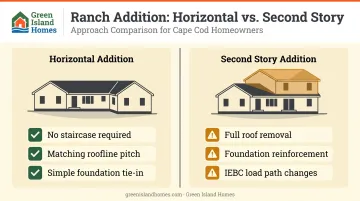
Multi-story additions face a steeper structural burden. Under IEBC Section 502.4, adding vertical loads that increase stress on existing gravity elements by more than 5% can require those elements to be replaced or altered — a significant cost driver that horizontal additions largely avoid.
That structural simplicity, however, doesn't guarantee a clean result. The design side has its own demands.
The One Challenge Specific to Ranch Additions
The low-profile aesthetic that makes ranch homes charming is also where most addition projects go wrong. When a new structure is visually out of proportion, it reads as an afterthought rather than part of the original home. The three most common culprits:
- Roofline pitch that doesn't match the existing slope
- Material mismatches in siding, trim, or fascia
- Window alignment that breaks the horizontal rhythm of the facade
Getting these right starts at the first design conversation — before any permits are pulled or framing begins.
Before You Build: Planning Considerations You Can't Skip
Floor Plan and Traffic Flow
Before any design work starts, map your existing floor plan carefully:
- Which rooms border the intended addition site?
- Can the existing hallway connect to the new bedroom without cutting through private spaces?
- Does the new bedroom need its own bathroom, or can an existing one be accessed via a short new hallway?
Getting traffic flow right from the start prevents expensive redesigns later and ensures the new bedroom functions as a private retreat rather than a pass-through corridor.
Foundation and Structural Review
For a horizontal addition, the new foundation must tie cleanly to the existing one. Poor connections create differential settlement over time: cracks at the joint, sticking doors, and separating rooflines. For older Cape Cod and Vineyard ranch homes, have a contractor or structural engineer assess existing footings before design is finalized. A structural review is a small upfront cost that prevents expensive surprises mid-project.
Roofline Integration
The most common mistake in ranch additions is a mismatched roofline. A steep new pitch next to a low original pitch looks awkward and creates leak-prone valleys where the two surfaces meet.
The solution is either extending the existing ridgeline at the same pitch or designing the addition with a complementary pitch that transitions cleanly. Get this detail into your drawings early — it affects framing, insulation, and overall cost.
Zoning, Permits, and Coastal Regulations
Massachusetts law (780 CMR 105.1) makes this unambiguous: you cannot construct or alter a building without the required permit. For Cape Cod and Martha's Vineyard homeowners, the permitting picture is more layered than most:
- Setbacks: Barnstable's RB zone requires 20 ft front and 10 ft side/rear setbacks; Falmouth's standard is 25 ft street and 10 ft side/rear. These vary by district and overlay — verify your specific parcel.
- Lot coverage limits: Some Barnstable groundwater protection overlays cap coverage at 15% or 2,500 sq ft.
- Coastal zone rules: Both Barnstable and Dukes counties fall within the Massachusetts coastal zone. Projects near wetlands or coastal floodplains may require Conservation Commission review.
- Septic (Title 5): Adding a bedroom to a septic-served home requires a Title 5 review — the system must be sized for the new bedroom count.
- Martha's Vineyard Commission: Single bedroom additions typically won't trigger MVC Development of Regional Impact review, but coastal location, proximity to a great pond, or a prior DRI on the property can change that.
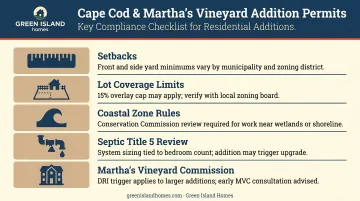
The takeaway: verify zoning, overlays, and septic capacity before you finalize any footprint.
Material Matching
Decades-old siding and roofing won't match new materials off the shelf. Two approaches work well:
- Harvest original materials from a less visible side of the house (a rear wall, for example) and use them on the street-facing addition facade, replacing the donor wall with new materials
- Design an intentional contrast — choose a complementary material for the addition that reads as a deliberate design decision rather than an imperfect match
Either approach works. The worst outcome is attempting a match that falls visibly short — once you've settled on your material strategy, you're ready to move into structural planning.
Bedroom Addition Options: Which Approach Works Best
Horizontal Bedroom Wing
The most common and architecturally harmonious option. A dedicated wing added to the side or rear preserves single-story living, keeps the addition within the home's horizontal profile, and allows for a private hallway entry that separates the new bedroom from the main household.
This approach works well when:
- The lot has sufficient side or rear space after setbacks
- Septic capacity supports an additional bedroom count
- The addition can connect via a short hallway without cutting through existing private rooms
Master Suite Wing
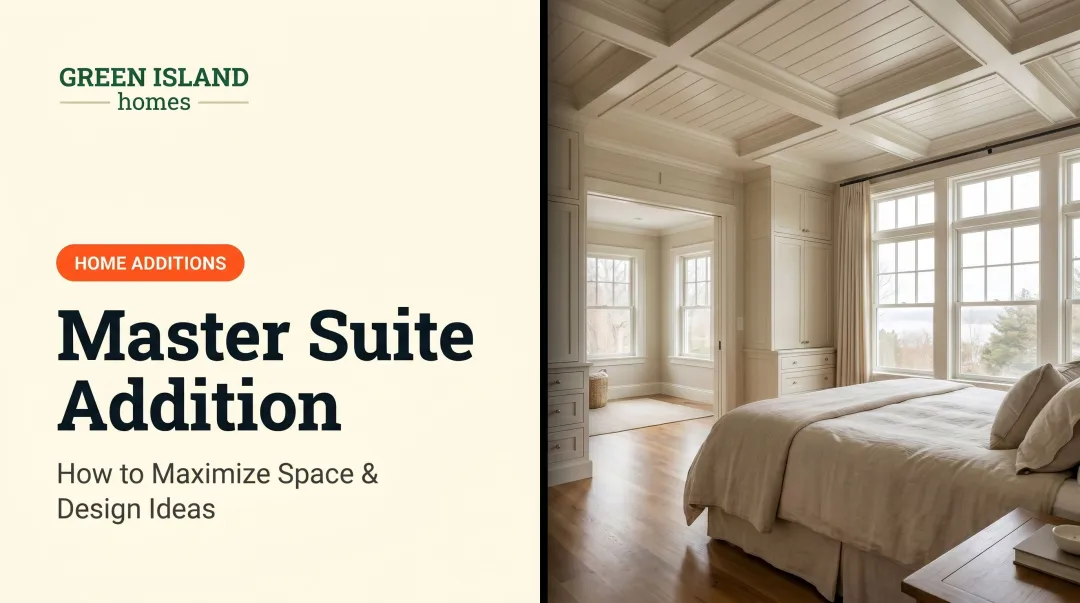
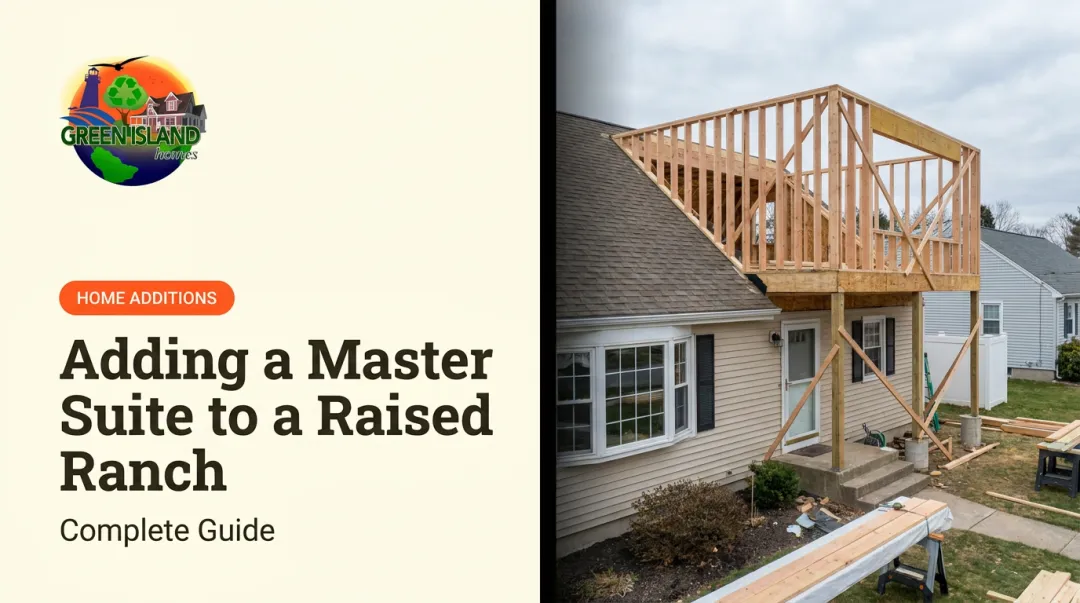
Older ranch homes often have compact original bedrooms with shared bathrooms. A master suite wing — combining a large bedroom, walk-in closet, and en suite bathroom — addresses all of that in one project.
Positioning the addition against an existing bathroom wall lets you route plumbing through shared walls, which cuts supply and drain line costs considerably. A short connecting hallway can even allow the existing bathroom to serve the suite without building a new one from scratch.
A few details that affect siting and budget:
- Shared plumbing walls reduce new line runs significantly
- Direct deck or patio access from the suite requires exterior door rough-in and framing
- En suite bath placement relative to existing drain stacks should be resolved early in design
Bump-Out Extension
A bump-out extends an existing room outward — typically 6 to 10+ feet — to create a dedicated bedroom space or expand a small existing bedroom to a functional size. It works best when modest square footage solves the problem rather than a full wing.
One point that catches homeowners off-guard: code-supported floor cantilevers are measured in inches, not feet. A true bedroom-sized bump-out requires a slab, crawlspace, or engineered foundation — plan and budget accordingly.
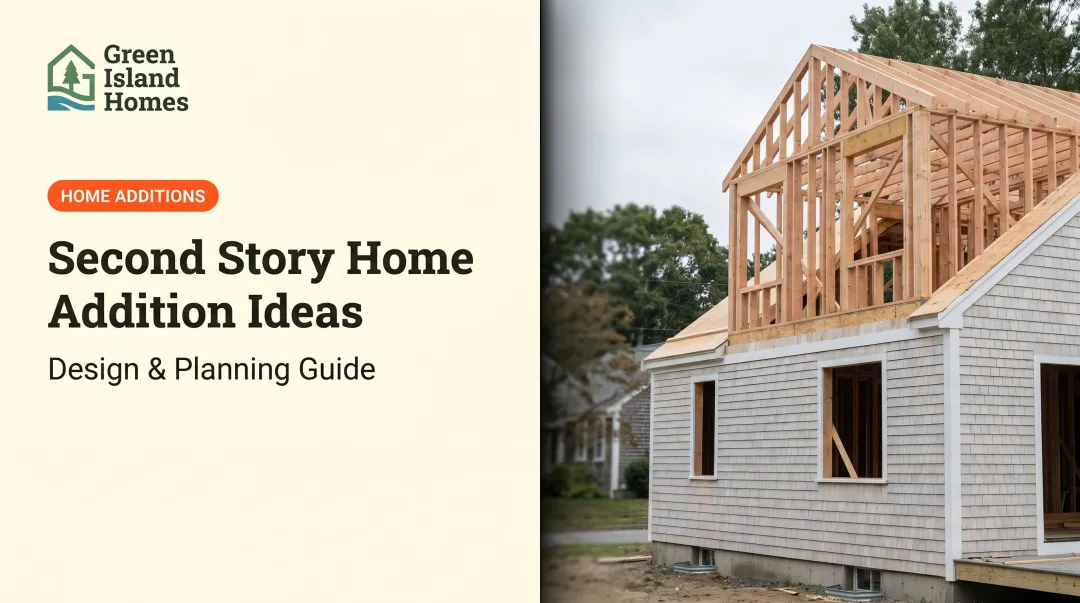
Second Story: Last Resort Only
Adding a second story can double living space without expanding the footprint, which is appealing when the lot is constrained. But for ranch homes, it's the most complex and expensive path:
- The existing foundation likely wasn't engineered for the added load
- The IEBC 5% rule may require replacing or altering gravity load-carrying elements
- The entire roof must be removed and rebuilt
- Residents typically need to vacate during construction
- Costs are substantially higher than horizontal alternatives
Reserve this option for genuinely constrained lots where horizontal expansion isn't feasible.
Design Strategies to Maximize Space in Your New Ranch Bedroom
Use the Roof Pitch, Don't Fight It
Ranch additions default to low ceilings when the roof geometry is ignored. The better approach: vault or cathedral the ceiling within the addition, using the roof pitch to open the room upward rather than accepting a flat ceiling that stops at standard height. Exposed beams or a clerestory window strip near the roofline adds both visual height and natural light — two things that make a bedroom feel far larger than its square footage suggests.
Built-In Storage Is Non-Negotiable
In a room with constrained dimensions, freestanding furniture quickly dominates floor space. Built-ins solve this:
- Built-in wardrobes along knee walls or under-eave spaces use geometry that freestanding pieces can't access
- Window seats with storage beneath add seating and hidden storage without consuming floor area
- Built-in shelving flanking a bed replaces nightstands and dressers with purpose-built millwork
Green Island Homes handles custom closet and built-in carpentry as part of their bedroom addition services. Bring it up early in the design process so storage is integrated from the start, not retrofitted later.
Window Placement and Outdoor Connection
Align window header heights across the addition's facade with those of the existing home. That alignment ties the addition to the original structure more convincingly than any exterior finish can. For light inside the room, position windows to maximize cross-ventilation and avoid direct west-facing sun exposure (relevant on Cape Cod where afternoon heat gain matters in summer).
That outdoor orientation sets up another strength of ranch-style design: the indoor-outdoor connection. French doors or a sliding glass door to a private patio or deck extends the perceived size of the room significantly — and on the Cape, it's a feature that earns its cost.
Layout and Circulation
Keep the bedroom floor clear:
- Position the closet and bathroom entry on the same wall to avoid fragmenting usable space
- Use pocket or barn doors in tighter rooms — swing space from a standard door is a real cost in small bedrooms
- Avoid hallway waste by designing the hallway connection to do double duty where possible (accessing both the new bedroom and a bathroom, for example)
What Does a Ranch House Bedroom Addition Cost?
Cost Benchmarks
The most reliable published data for this region comes from the 2024 Cost vs. Value Report from JLC/Remodeling:
| Project Type | New England Job Cost | New England Resale Value | Cost Recouped |
|---|---|---|---|
| Midrange Primary Suite | $170,310 | $69,270 | 40.7% |
| Upscale Primary Suite | $346,872 | $94,811 | 27.3% |
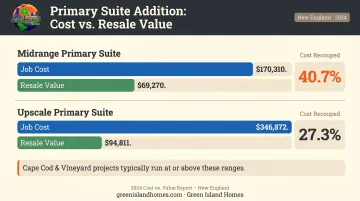
For basic bedroom bump-outs and bedroom wings without bathrooms, HomeAdvisor's 2025 guide reports a broad national average of $51,022 with a typical range of $21,903–$83,368. These are secondary estimates — treat them as directional context, not quotes.
Cape Cod and Martha's Vineyard projects consistently run toward or above the top of these ranges. Energy code requirements, limited labor availability, material transportation to the islands, and the permitting complexity described above all contribute. The only reliable number is one obtained from a local contractor working from finished drawings.
The Biggest Cost Variables
- Foundation type: slab vs. crawlspace vs. full basement
- Roofline complexity: simple ridge extension vs. complex valley tie-in
- Bathroom inclusion: plumbing rough-in and fixtures add meaningful cost
- Electrical and HVAC: older ranch homes may need panel upgrades or duct extensions to serve the new space
- Scope changes mid-project: the fastest way to exceed a budget is finalizing design decisions after construction begins
Each of these variables shows up differently depending on how clearly the project is defined before bidding. Finalized drawings produce comparable bids. Vague plans produce guesses priced conservatively — which means paying for uncertainty rather than work.
ROI Perspective
The Cost vs. Value data shows a midrange primary suite in New England returning roughly 41 cents on the dollar at resale. That figure looks modest, but in constrained coastal real estate markets where buildable square footage is genuinely limited and buyers prioritize private primary suites, a well-executed addition adds marketability that doesn't always show up in percentage calculations.
The lifestyle value — privacy, space, functionality — tends to be the stronger argument for most homeowners.
Choosing the Right Contractor for Your Ranch Bedroom Addition
A bedroom addition on a ranch home involves foundation tie-ins, roofline integration, framing, plumbing, electrical, and finish work — often with coastal permitting layered on top. Contractor selection matters more than it does for simpler projects.
What to Look For
- Holds a Massachusetts HIC registration — required by state law for owner-occupied residential work, with contracts over $1,000 in writing
- Carries a Construction Supervisor License (CSL) for permitted structural work (verify at Mass.gov's license-check tool)
- Has hands-on ranch addition experience, specifically with low-profile roofline tie-ins and slab-to-existing-foundation connections
- Knows local code: Cape Cod and Vineyard permitting has layers that contractors from off-Cape routinely underestimate

What Good Communication Looks Like
A reliable contractor on a project like this provides:
- Written scope before work begins, not a verbal summary
- Clear milestones: foundation, framing, roofline tie-in, rough mechanicals, finish work
- Proactive communication when material or design decisions come up, rather than reactive calls when problems arise
Green Island Homes, based in Edgartown, serves homeowners across Cape Cod and Martha's Vineyard. They're fully licensed and insured, hold HomeAdvisor's Screened & Approved, Top Rated, and Elite Service designations, and handle all phases of addition construction.
Clients consistently point to communication as a standout: "great communication with us through the entire project" and "the dream construction person to work with."
Getting Accurate Quotes
Get multiple quotes — but make sure they're based on identical plans. A quote derived from undefined layouts is pricing assumptions, not actual work. Finalize your drawings first, then distribute the same set of plans to each contractor. That's the only way the numbers are actually comparable.
Frequently Asked Questions
How much does it cost to add a bedroom to a ranch house?
A basic bump-out or bedroom extension typically falls in the $21,903–$83,368 national range (HomeAdvisor 2025), while a full master suite wing in New England averages $170,310 per the 2024 Cost vs. Value Report. Cape Cod and Martha's Vineyard projects tend toward the higher end, driven by local labor rates, permitting complexity, and material costs.
Do I need a permit to add a bedroom to my ranch home?
Yes. Massachusetts law (780 CMR 105.1) requires a building permit for any structural addition. On Cape Cod and Martha's Vineyard, you'll also need to verify setbacks, lot coverage limits, septic bedroom count, and any coastal or environmental overlays before finalizing your plans.
How long does a ranch house bedroom addition take from start to finish?
A bedroom wing typically takes 3–6 months from design through completion; a bump-out can move faster. Permitting timelines in coastal Massachusetts — particularly if Conservation Commission review is required — can add several weeks to the schedule, so build that time into your schedule from the start.
Is it better to expand horizontally or add a second story to a ranch house?
For most ranch homeowners with available lot space, horizontal expansion is simpler, more cost-effective, and architecturally more natural. A second story requires removing the existing roof, reinforcing the foundation, and vacating the home during construction — disruptions that a well-planned horizontal addition avoids.
Will adding a bedroom increase my ranch home's value?
Yes — New England midrange primary suite additions recoup roughly 40.7% of job cost at resale per the 2024 Cost vs. Value Report. In high-demand coastal markets like Cape Cod and Martha's Vineyard, where livable square footage is limited, buyer value often exceeds what standard ROI figures reflect.
Can a ranch house bedroom addition include a private bathroom?
Yes — most master suite additions include an en suite bathroom. Where possible, positioning the addition adjacent to an existing plumbing wall reduces the cost of running new supply and drain lines, making the bathroom addition less expensive than starting entirely from scratch.