But scope and complexity matter here. A master suite addition isn't a simple room expansion. It involves plumbing, electrical, structural work, and often new roofing — all of which require professional planning, permits, and careful decision-making before a single nail is driven.
For homeowners on Cape Cod and Martha's Vineyard, there are additional layers: coastal zoning rules, conservation reviews, island logistics, and a regional cost environment that runs above national averages. This guide covers what a master suite includes, how to choose between a ground-level or second-story addition, what to budget, and the planning decisions that separate a smooth project from a costly one.
Key Takeaways
- A master suite includes a private bedroom, en-suite bathroom, and walk-in closet; the bathroom typically accounts for the largest share of project cost.
- National project costs run $170,000–$352,000; Boston-area benchmarks run higher, and Cape Cod/Martha's Vineyard projects often exceed those.
- First-floor additions cost less to build; second-story additions preserve yard space but require structural work.
- Plan a 10–20% contingency on top of your base budget for any coastal or older-home project.
- Work with a licensed local contractor who knows the permit landscape; local permitting on Cape Cod and Martha's Vineyard is more complex than most regions.
What Is a Master Suite Addition?
A master suite — increasingly referred to as a primary suite — is more than a large bedroom. It's a self-contained private space that combines a sleeping area, an attached en-suite bathroom, and a dedicated closet or dressing area, all designed around comfort and privacy.
According to NAHB data, the average primary bedroom runs 231 square feet, the primary bathroom 146 square feet, and the walk-in closet 85 square feet — totalling roughly 460 square feet of dedicated private space when combined.
That square footage tells part of the story. What really distinguishes a master suite addition from a standard bedroom expansion is scope — and the trades involved. A bedroom expansion might mean framing and drywall. A master suite addition requires:
- Full plumbing rough-in for the en-suite (the initial pipe and drain work, and typically the largest cost variable)
- Electrical upgrades for lighting, heated floors, and ventilation
- HVAC extension or a dedicated zone
- Structural work — either a new foundation/slab or reinforcement of an existing structure
- Permitting across multiple trade categories
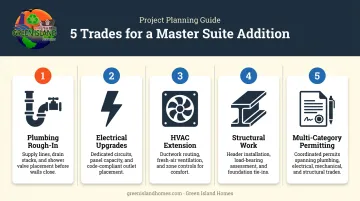
Each of those items involves separate subcontractors, inspections, and lead times — which is why planning and sequencing matter as much as the design itself.
What's Included in a Master Suite Addition?
Bedroom Space
The bedroom component needs to do more than hold a king-size bed. A well-planned layout accounts for:
- Adequate wall runs for furniture placement
- Natural light through properly positioned windows
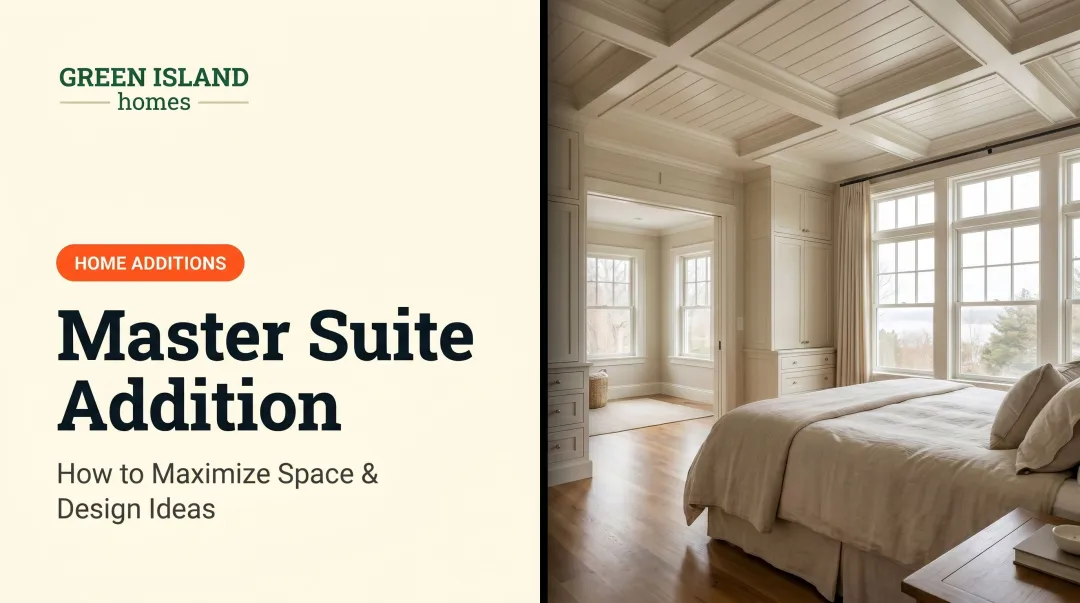
- Ceiling details like tray ceilings that add visual height
- Optional features: a sitting area, gas fireplace, or French doors to a private patio or deck
The JLC/Cost vs. Value upscale benchmark describes a 32x20-foot suite with a sleeping area, sitting area, custom built-ins, and French doors — a practical reference point for what a fully realized master suite looks like.
En-Suite Bathroom
The bathroom is the most cost-intensive component of any master suite addition. A midrange en-suite typically includes:
- Walk-in shower (separate from tub)
- Freestanding or soaking tub
- Double-bowl vanity with solid-surface countertop
- Tile floors and adequate ventilation
An upscale version adds dual-shower systems, stone walls and floors, frameless glass enclosures, in-floor heating, two custom vanities with stone countertops, and a partitioned toilet area. The gap between these two scopes accounts for tens of thousands of dollars in cost difference.
Closets and Storage
Closets connect directly to the bathroom layout, so storage planning belongs in the design phase — not as a last-minute addition once framing is underway. Walk-in closets, built-in shelving, and custom cabinetry need to be positioned and sized early so they integrate cleanly with the bathroom and bedroom flow.
Adding them later means working around existing walls. That costs more and usually forces compromises on size or placement.
First Floor vs. Second Floor: Which Is Right for Your Home?
Whether to build out (ground level) or build up (second story) is one of the earliest decisions you'll make — and it shapes everything else. Cost, disruption, structural requirements, and long-term livability all hinge on this choice.
Ground-Level Addition
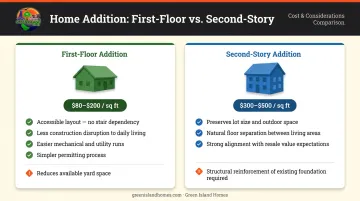
According to Angi's 2026 home addition data, ground-floor additions run $80–$200 per square foot, versus $300–$500 per square foot for second-story additions — a difference that can approach 50% on total project cost.
Beyond cost, first-floor additions offer practical advantages:
- No staircase required, which matters for accessibility and aging in place
- Less disruption to the occupied home during construction
- Easier mechanical runs for plumbing and HVAC
- Simpler permit path in many municipalities
The trade-offs: you'll need either a slab or crawlspace foundation, and you'll reduce your usable yard or lot space.
Best fit: Homeowners planning to stay long-term, those accommodating aging parents or multigenerational living, or anyone prioritizing main-level accessibility.
Second-Story Addition
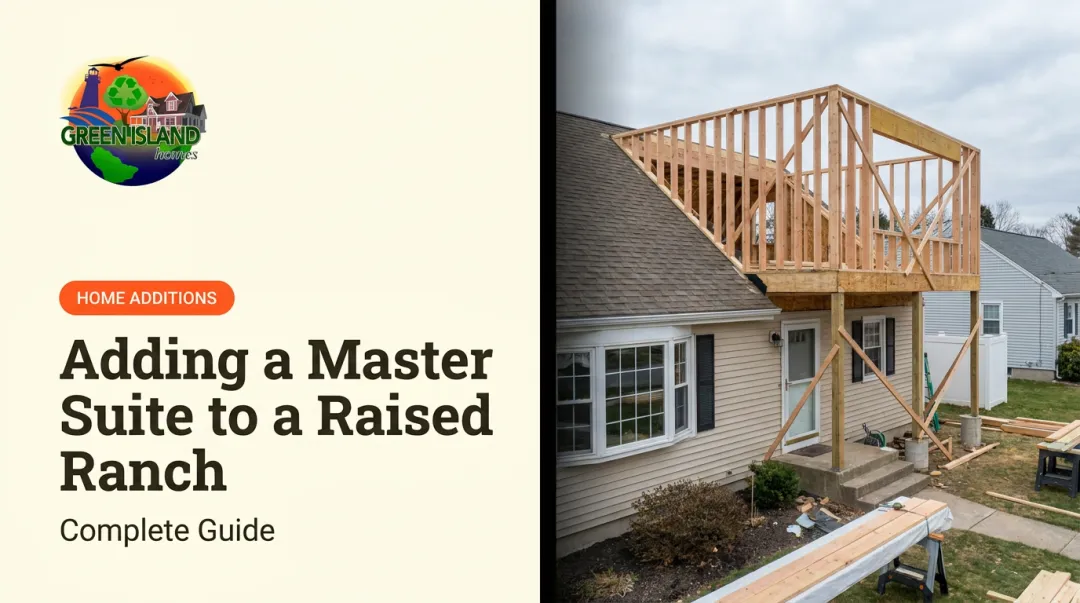
Building up preserves your lot but adds structural complexity. The existing structure may need reinforcement to carry the new load, the roof must be partially or fully removed and rebuilt, and a staircase has to fit into the floor plan.
Those requirements add up fast — full second-story additions average $175,000 in structural costs alone, before finishes. Still, the advantages can justify that investment:
- Maximizes lot space in dense neighborhoods
- Creates genuine separation between living areas and private sleeping quarters
- Aligns with comparable homes in the neighborhood where two-story layouts are standard
Best fit: Homeowners with limited lot size, those in two-story neighborhoods where the addition supports resale alignment, or anyone prioritizing privacy between floors.
How Much Does a Master Suite Addition Cost?
National and Regional Benchmarks
The 2025 Cost vs. Value Report from JLC puts national costs at:
- Midrange primary suite (24x16 feet): $170,517
- Upscale primary suite (32x20 feet): $351,613
For Boston — the closest authoritative Massachusetts benchmark available — those figures rise to $183,267 (midrange) and $379,392 (upscale).
Cape Cod and Martha's Vineyard projects typically run at or above Boston-level costs. Coastal construction regulations, environmental review requirements, and island logistics all push budgets higher.
What Drives Cost Variance
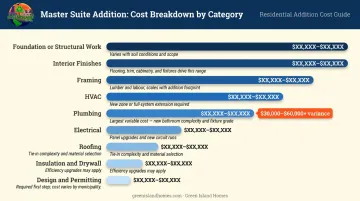
The major cost categories include:
| Category | Notes |
|---|---|
| Design & permitting | Architecture/engineering runs ~1.5% of construction cost |
| Foundation or structural work | ~10.5% for new-home construction; varies for additions |
| Framing | ~16.6% of construction cost |
| Roofing | Required for second-story additions; optional scope for first-floor |
| Plumbing | Largest variable — basic en-suite vs. luxury spa can shift budget by $30,000–$60,000+ |
| Electrical | Lighting, heated floors, ventilation |
| HVAC | New zone or extension of existing system |
| Insulation & drywall | ~24% for interior finishes when combined |
| Interior finishes | Tile, fixtures, cabinetry, millwork |
(NAHB 2024 construction cost percentages used as category context; actual addition splits vary.)
Permitting Costs on Cape Cod and Martha's Vineyard
Building permits are required for any addition in Massachusetts — no exceptions. In coastal communities, additional approvals often apply:
- Tisbury (Martha's Vineyard): Residential additions at $0.75/sq ft, $200 minimum; separate $75 base fees for wiring, gas, and plumbing permits
- Barnstable Conservation Commission: Notice of Intent (Category 1, including additions) costs $200
- Historic districts (such as Edgartown's William Street Historic District) require a certificate of appropriateness before any permit is issued
These fees are additive. Conservation and historic review timelines routinely add 4–12 weeks to a project schedule, so build that time in early.
Set a Contingency Budget
NARI recommends a remodeling contingency of 10–20% on top of your base budget. The AIA puts design and construction contingencies at 5–10% depending on project risk. For coastal markets, older homes, or projects near wetlands or historic districts, carry the higher end. On Cape Cod and the Vineyard specifically, unexpected structural finds in older homes, coastal material premiums, and multi-agency permit delays make that cushion more necessity than precaution.
How Much Value Does a Master Suite Addition Add?
ROI at Resale
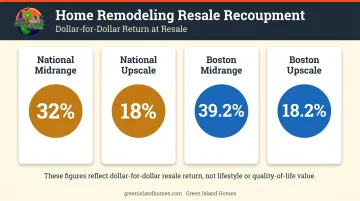
The 2025 Cost vs. Value data shows modest resale return nationally:
| Market | Scope | Cost Recouped |
|---|---|---|
| National | Midrange | 32% |
| National | Upscale | 18% |
| Boston, MA | Midrange | 39.2% |
| Boston, MA | Upscale | 18.2% |
A master suite addition rarely pays for itself at resale on a dollar-for-dollar basis. What it does deliver is added livable square footage, a higher bedroom count, and stronger market positioning in areas where buyers expect a primary suite — all of which carry real weight in high-demand coastal markets like Cape Cod and Martha's Vineyard.
Factors That Influence Return
- Construction quality: Finishes that align with the neighborhood's price tier outperform spec-level or over-built work
- Neighborhood comps: Avoid building a $380,000 suite onto a home in a neighborhood where comparable homes sell for $500,000
- Energy-efficient features: In-floor heat, proper insulation, and efficient HVAC improve both comfort scores and buyer perception
- Flexible use: Suites designed to function as guest quarters or multigenerational living spaces appeal to a broader buyer pool
Lifestyle ROI
Resale numbers only tell part of the story. For homeowners planning to stay put — especially on the Vineyard or mid-Cape where second homes often become primary residences — the day-to-day return is harder to quantify but easy to feel. A dedicated suite means no sharing a bathroom with guests, room to accommodate aging-in-place needs, and a space that actually fits how you live. That's rarely reflected in a cost-recouped percentage, but it's frequently the deciding factor.
Pro Tips for Planning Your Master Suite Addition
Start With Your Layout Goals, Not Features
Before selecting a tile pattern or tub style, map out how you actually live: Where do you want natural light? Do you need single-level accessibility now or eventually? What views matter? A layout that fits your life reduces costly mid-construction changes — and those changes are far more expensive once framing is up.
Ensure the Exterior Blends With Your Existing Home
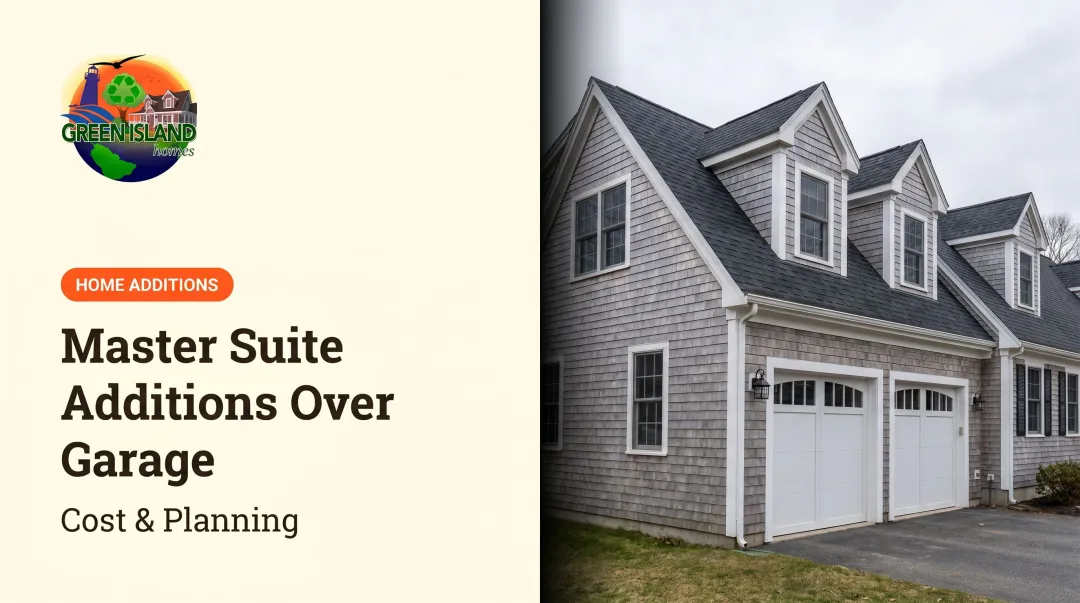
An addition that looks like it was bolted on reduces curb appeal and resale value. Roofline continuity, matched siding, aligned window heights, and complementary trim details all signal craftsmanship to buyers. On Cape Cod and Martha's Vineyard, where architectural character is closely tied to property value, exterior integration isn't optional — it's part of the investment.
Build In Accessibility From the Start
Universal design features cost far less when planned from the beginning than when retrofitted later. Consider:
- Curbless showers sized at minimum 30x60 inches for roll-in access per U.S. Access Board guidance
- Doorways at least 36 inches wide — wider than the 32-inch ADA minimum, and recommended for aging-in-place use
- Lever-style door handles instead of knobs
- Structural blocking installed now for future grab bars (mounted 33–36 inches above finish floor)
- Beveled thresholds at 32 inches minimum to reduce trip hazards
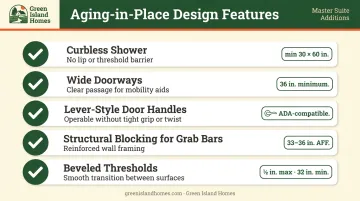
These features make the suite work across all life stages without requiring future renovations.
Work With a Local Contractor Who Knows Your Market
In a coastal market like Cape Cod or Martha's Vineyard, local expertise directly affects your timeline and budget. Contractors familiar with the region know which conservation jurisdictions require Notice of Intent filings, how to work around seasonal construction windows, and how to manage the logistics of building on the Vineyard.
Green Island Homes, based in Edgartown, MA, handles all phases of residential additions across both Cape Cod and Martha's Vineyard. They're fully licensed and insured, hold HomeAdvisor's Screened & Approved, Top Rated, and Elite Service recognitions, and manage everything from framing through finish work — which matters when you're navigating a project with this many moving parts.
Plan for Disruption and Set a Realistic Timeline
Once you've chosen your contractor, build a realistic schedule before breaking ground. HomeAdvisor reports most bedroom and bathroom additions take 3–6 months from design through completion, with highly customized builds stretching to 12 months. In resort markets like Cape Cod and Martha's Vineyard, off-season construction (fall through early spring) can sometimes improve contractor availability and scheduling flexibility. Build permit timelines — especially for conservation or historic review — into your schedule from day one, not as an afterthought.
Frequently Asked Questions
Frequently Asked Questions
How much does a master suite addition cost?
National benchmarks from the 2025 Cost vs. Value Report put midrange projects at $170,517 and upscale at $351,613; Boston-area figures run higher at $183,267 and $379,392. Cape Cod and Martha's Vineyard projects typically meet or exceed those regional figures due to local labor costs, permitting complexity, and island logistics.
What is included in a master suite addition?
A master suite addition typically includes a private bedroom sized for a king bed, an en-suite bathroom (the most complex and costly component), and a walk-in or reach-in closet. Common optional upgrades include a sitting area, gas fireplace, tray ceilings, and French doors to an outdoor space.
How much value does a master suite add to a house?
The 2025 Cost vs. Value Report shows national recoupment of 32% for midrange suites and 18% for upscale, with Boston-area midrange projects recouping ~39%. Coastal market demand and energy-efficient features can improve those numbers, and lifestyle benefits add value that resale figures don't fully capture.
How long does it take to build a master suite addition?
The full process — design, permitting, and construction — typically takes 3–6 months, with complex or custom projects reaching 12 months. Permit timelines in coastal, conservation, or historic review areas on Cape Cod and Martha's Vineyard may extend the schedule and should be factored in early.
Do I need a permit for a master suite addition?
Yes — building permits are required under Massachusetts state building code (780 CMR). Depending on your parcel's location, Cape Cod and Martha's Vineyard homeowners may also need conservation commission approval, zoning variances, or historic preservation review.