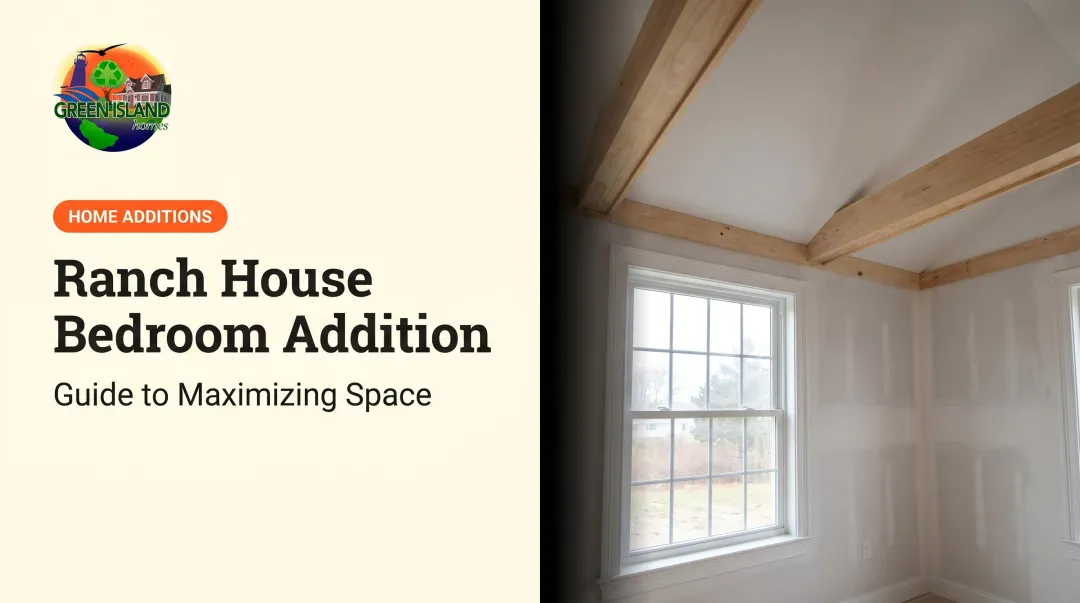
This guide covers the three main approaches to adding a bedroom, realistic cost ranges for each, what drives those costs in a coastal Massachusetts context, and the planning steps to get your project moving.
Key Takeaways
- Bedroom additions typically cost $40,000–$150,000+ depending on approach, size, and finish level
- Three main routes: ground-floor addition, second-story addition, or converting existing space
- Expect to budget higher on Cape Cod and Martha's Vineyard — island logistics and regional labor push costs above national averages
- Foundation work, ensuite plumbing, and structural reinforcement drive the biggest cost swings
- Always reserve a 15–20% contingency — older homes almost always reveal surprises once walls open
Types of Bedroom Additions: Which Approach Is Right for You?
Building a Ground-Floor Bedroom Addition
A ground-floor addition extends your home's footprint outward. It's the most popular choice for multigenerational living arrangements, aging-in-place needs, and guest rooms that benefit from direct outdoor access.
Typical cost range: $40,000–$100,000, with per-square-foot costs running $80–$200 nationally.
Key advantages:
- No stairs required — accessible for all ages and mobility levels
- Can connect directly to a patio, deck, or garden
- Simpler framing and roofing than a second-story project
- Easier HVAC tie-in to existing systems
The trade-offs are real:
- You'll lose yard space — a meaningful sacrifice on smaller Cape Cod lots
- A new foundation can add substantially to the budget on its own
- Matching existing siding, trim, and rooflines demands careful planning
On older Cape Cod-style homes, that exterior matching requires a contractor who understands the regional aesthetic and how buyers respond to it.
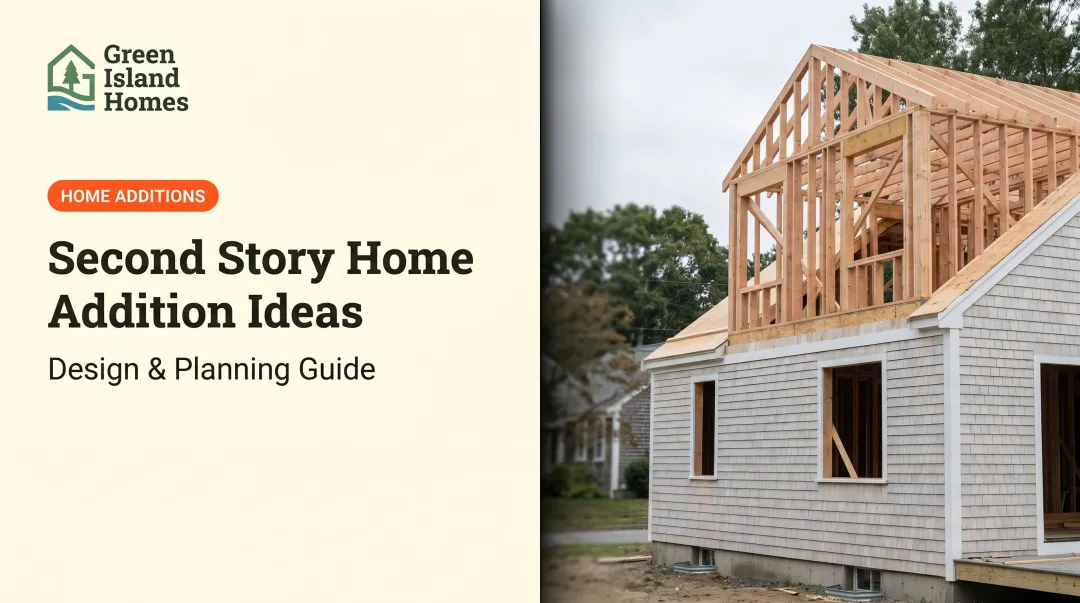
Adding a Second-Story Bedroom
Building upward preserves your yard entirely, which makes it the preferred option on smaller coastal lots where every square foot of outdoor space counts.
Typical cost range: $60,000 on the very low end; realistically $100,000–$250,000 for most projects. Angi's 2026 data puts build-up costs at $300–$500 per square foot, reflecting the structural complexity involved.
Why does it cost more? Several reasons:
- Load-bearing wall assessment — existing walls and the foundation must be evaluated to confirm they can carry the added weight
- Structural reinforcement — older New England homes frequently need framing upgrades before a second story is viable
- Staircase integration — you need to carve out interior space for a new staircase, which often disrupts an existing room
- Roofline modifications — lifting and reconfiguring the roof adds labor, time, and material cost
- HVAC extension — reaching the new space with heating and cooling is rarely straightforward
For older homes on Cape Cod and Martha's Vineyard, a structural engineer's assessment isn't optional before committing to a second-story plan. Massachusetts building code under 780 CMR Chapter 34 requires that proposed work on existing buildings be evaluated for effects on structural systems, and a competent contractor will insist on that review before breaking ground.
Converting Existing Space into a Bedroom
Attic, basement, and garage conversions are typically the most budget-conscious path — though none of them are without complications.
| Conversion Type | Typical Cost Range |
|---|---|
| Garage conversion | $6,000–$28,000 |
| Attic bedroom | $9,000–$65,000 |
| Basement finishing | $15,000–$75,000 |
| Bump-out extension | $5,000–$35,000 |
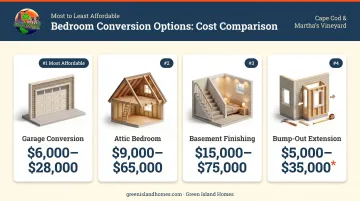
Before pricing any of these, confirm egress compliance. Massachusetts residential code (780 CMR Chapter 3) requires emergency escape and rescue openings in bedrooms — meaning a window with minimum net clear opening dimensions, maximum sill height, and specific width and height requirements. A basement or attic that doesn't meet those specs will need new egress windows before the space can legally be called a bedroom.
Moisture control is the other compliance factor that catches homeowners off guard. Salt air, seasonal humidity swings, and proximity to water create conditions where inadequate insulation and vapor barriers can turn a converted space into a mold problem within a few years.
Massachusetts follows IECC 2021 with state amendments as its base energy code. Meeting those standards in a conversion often means adding more insulation than initially budgeted — a cost worth factoring in early.
A note on bump-outs: If you just need more breathing room in an existing bedroom rather than a brand-new room, a bump-out extension — pushing one wall outward by 8–15 feet — can cost $5,000–$35,000. It won't create an additional bedroom, but it can meaningfully improve a cramped primary suite.
How Much Does a Bedroom Addition Cost?
Cost Summary by Approach
| Addition Type | Typical Cost Range | Notes |
|---|---|---|
| Ground-floor addition | $40,000–$100,000 | Foundation type is a major variable |
| Second-story addition | $100,000–$250,000 | Structural review required |
| Garage/attic/basement conversion | $15,000–$75,000 | Egress and moisture work may add cost |
| Bump-out extension | $5,000–$35,000 | Expands existing room, not a new bedroom |
These are ballpark ranges. Treat them as a rough reference, not a contractor quote.
What It Costs in Cape Cod and Martha's Vineyard
National cost data from sources like HomeGuide and Angi is a useful starting point, but coastal Massachusetts runs higher. U.S. Department of Labor data shows Massachusetts carpenter median wages at $34.19/hour compared to the national median of $28.51/hour — a roughly 20% labor premium right out of the gate. The Barnstable Town metro comes in at $30.57/hour, still above the national benchmark.
On Martha's Vineyard, material delivery involves ferry logistics through the Steamship Authority, which adds freight time and coordination cost. That premium isn't published as a fixed percentage — it varies by contractor and project — but it's a real line item that contractors will address during bidding.
Where the Money Goes
For a typical bedroom addition, expect your budget to break down roughly as follows:
- Labor: 40–60% of total project cost
- Materials: 25–40%
- Permits and design fees: 5–10%
- Contractor overhead and margin: remainder
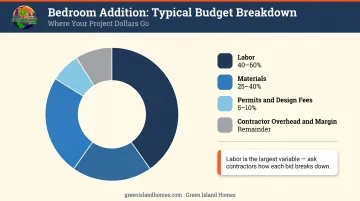
This split is worth knowing when you're comparing bids. If one quote comes in dramatically lower than the others, ask which line item is thinner — and why.
What Does a $50,000 Budget Get You?
At $50,000, you can realistically accomplish:
- A modest ground-floor bedroom addition (roughly 150–200 sq ft with standard finishes)
- A well-finished garage conversion with proper egress windows and insulation
- A smaller attic conversion where the structure already supports the project
What you can't do at $50,000: add a full ensuite bathroom, build a second story, or construct a spacious primary suite with a walk-in closet — those projects start at $80,000–$100,000+ in this market, and often higher once structural and finish costs are factored in.
Build in a Contingency
Budget 15–20% above your quoted contract price for unexpected costs. Older Cape Cod and Martha's Vineyard homes frequently reveal outdated wiring, undersized plumbing, and compromised structural members once walls are opened. Working with housing stock that's often 50–100 years old means surprises are part of the process, not a sign of poor workmanship. Budget for them upfront and you won't be caught off guard mid-project.
What Factors Drive the Cost of a Bedroom Addition?
Foundation and Structural Work
New foundation work for a ground-floor addition is often the single largest cost line item. Foundation costs range from $6–$50 per square foot depending on type — a simple slab runs much less than a full perimeter foundation. In coastal areas, frost line requirements and soil conditions can push foundation costs higher than inland projects.
For second-story additions, structural reinforcement of existing framing is the equivalent cost driver. If the existing walls and foundation weren't built to carry a second floor, that remediation work comes before any framing of the new space.
Plumbing and HVAC
Adding plumbing for an ensuite bathroom transforms a bedroom project into a plumbing project. Budget an additional $20,000–$75,000 for a new bathroom addition depending on scope and finish level, on top of the bedroom addition itself.
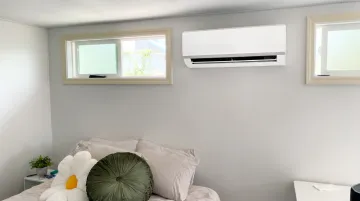
For heating and cooling, a ductless mini-split ($2,500–$6,000 installed) is often the most practical solution for additions. Extending existing ductwork into a new space requires opening walls, may demand HVAC system upgrades, and can be more disruptive and expensive than simply adding a dedicated unit for the new room.
Finish Level and Room Size
Square footage and finishes move the budget in direct proportion:
- A 200 sq ft bedroom with standard flooring, one closet, and painted drywall
- A 300+ sq ft primary suite with hardwood floors, a walk-in closet, custom trim, and high-end windows
Decide early what you actually need. Roughing in plumbing for a future ensuite — running pipes without installing fixtures — costs far less during construction than adding it later.
Permits, Design Fees, and Local Regulations
Building permits are required for all bedroom additions in Massachusetts, and they must be pulled before work begins. In Barnstable, the fee is $50 plus $5.10 per $1,000 of construction value. Fees vary by town — Falmouth uses a different schedule — so verify with your specific municipality.
Zoning rules add another layer. Each Cape Cod and Martha's Vineyard town sets its own requirements, and these directly affect what's buildable on your lot:
- Setbacks and lot coverage vary by district and town
- Height restrictions apply in many residential zones
- Edgartown's Historic District Commission reviews exterior changes in designated areas
- Tisbury's zoning bylaws define lot coverage and district-specific rules
These rules affect timelines and design decisions more than they block projects outright. Working with a contractor like Green Island Homes — based in Edgartown and licensed across the region — means working with someone who navigates these permit offices regularly.
Design Tips for Your New Bedroom Addition
Placement and Privacy
Position the new bedroom away from high-traffic interior zones — kitchens, living rooms, and main hallways. Window orientation matters both for natural light and for noise: a window facing a quiet side yard or backyard is almost always preferable to one facing a driveway or street.
Mismatched siding, a roofline that doesn't tie into the existing home, or windows in a different style will look out of place and hurt resale appeal. Cape Cod architectural detailing (cedar shingles, symmetrical window placement, low-pitched rooflines) needs to be addressed in the design phase, not corrected after framing is up.
Comfort, Soundproofing, and Energy Efficiency
In coastal Massachusetts, building science matters. Key elements to specify:
- Solid-core interior doors for noise reduction between the addition and the main house
- Dense-pack or spray foam insulation in walls and ceiling to meet or exceed IECC 2021 standards
- Double-pane windows with low-E coatings to manage heat loss in winter and solar gain in summer
- Vapor barriers and moisture management details, particularly in slab-on-grade or below-grade portions
Green Island Homes brings these same energy-efficient construction standards to addition work, including the insulation and moisture management details specific to Cape Cod's climate. A bedroom that performs well thermally costs less to heat in winter and stays more comfortable through humid Cape summers.
Flexible Layout Planning
A few decisions during design save significant cost and disruption later:
- Plan outlets on every wall — furniture arrangements change, and a wall with no outlets becomes a problem
- Include a proper closet from the start — a closet added as an afterthought often steals square footage awkwardly
- Rough in plumbing for an ensuite if there's any chance you'll want one within the next decade — the pipe work costs a fraction of what full installation costs later when walls are closed
Planning Your Bedroom Addition: Steps to Take
Define Goals, Budget, and Zoning Early
Before talking to contractors, get clear on two things: what you actually need from this space, and what your town allows.
- Define the goal — guest room, primary suite, multigenerational unit, aging-in-place bedroom?
- Set a realistic budget including a 15–20% contingency
- Contact your town's building or planning department before finalizing your approach — ask about setbacks, lot coverage limits, and whether your property is in a historic district
In some Cape Cod towns, lot coverage restrictions mean a ground-floor addition isn't possible without triggering a variance process. Better to know that before you've hired a designer.
Design, Permitting, and Construction Timeline
A typical bedroom addition moves through these phases:
- Contractor selection — get 2–3 quotes from licensed contractors with local addition experience
- Design and plan development — finalize drawings with your contractor or an architect
- Permit application — submitted to your town building department; processing time varies by municipality and complexity
- Construction — most bedroom additions take 3–6 months from groundbreaking to completion; simpler conversions can be faster
- Final inspections — required before the space is occupiable
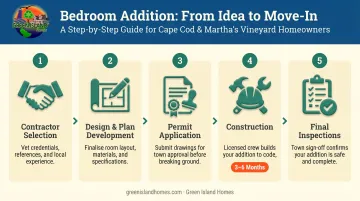
Permit timelines in Massachusetts vary. Don't assume a two-week turnaround. Some towns process straightforward additions in a few weeks; others take longer, particularly if historic district review is involved.
Financing and ROI
Common financing options for bedroom additions:
- Home equity loan — lump-sum borrowing secured by your equity; Bankrate reported a national average rate of 8.05% as of May 2026
- HELOC — revolving line of credit against your equity; more flexible draw schedule suits phased construction
- Construction loans — short-term variable-rate loans covering build costs, typically converted to permanent financing at completion
On ROI: the 2025 Cost vs. Value Report pegs a midrange primary suite addition at a 32.3% cost recoup nationally at resale. That figure reflects direct resale value recovery — not the full picture of value.
In coastal markets like Cape Cod and Martha's Vineyard, bedroom count directly affects what buyers will offer, especially for properties that rent seasonally. Dollar-for-dollar payback at resale is rarely the right metric; the stronger case is functional value, rental income potential, and marketability in a supply-constrained market.
Frequently Asked Questions
How expensive is it to add a bedroom to your house?
Nationally, bedroom additions average around $62,500, with ranges from roughly $20,000 for simple conversions to $100,000+ for full ground-floor or second-story additions. In Cape Cod and Martha's Vineyard, expect costs to sit at or above the upper end of those ranges given higher labor rates and island logistics.
What does a $50,000 renovation get you?
At $50,000, you can typically get a modest ground-floor addition with standard finishes, a garage-to-bedroom conversion, or an attic conversion where the structure is already suitable. A full ensuite, second-story addition, or large primary suite will require $80,000–$100,000 or more.
Do I need a permit to add a bedroom in Massachusetts?
Yes — a building permit is required for all bedroom additions in Massachusetts, and work cannot begin before it's issued. Your licensed contractor should handle the permit application and coordinate required inspections throughout construction.
Does adding a bedroom increase home value?
Adding a bedroom increases market value and buyer appeal, especially where buyers actively search by bedroom count. The 2025 Cost vs. Value Report shows roughly 32% cost recoup nationally for a midrange primary suite; in high-demand coastal markets like Cape Cod and Martha's Vineyard, a well-executed addition can be a strong draw even if full payback isn't guaranteed.
How long does a bedroom addition take to build?
Most bedroom additions take 3–6 months from groundbreaking to completion, with simpler attic or garage conversions finishing faster than ground-up builds. Design, permitting, and contractor scheduling typically add several weeks to months before construction even begins.
Is it cheaper to build up or build out for a bedroom addition?
Building out (ground-floor addition) is typically less expensive than building up (second story) because it avoids structural reinforcement of existing framing. However, on smaller coastal lots where yard space is limited, building up may be the only viable option regardless of cost.