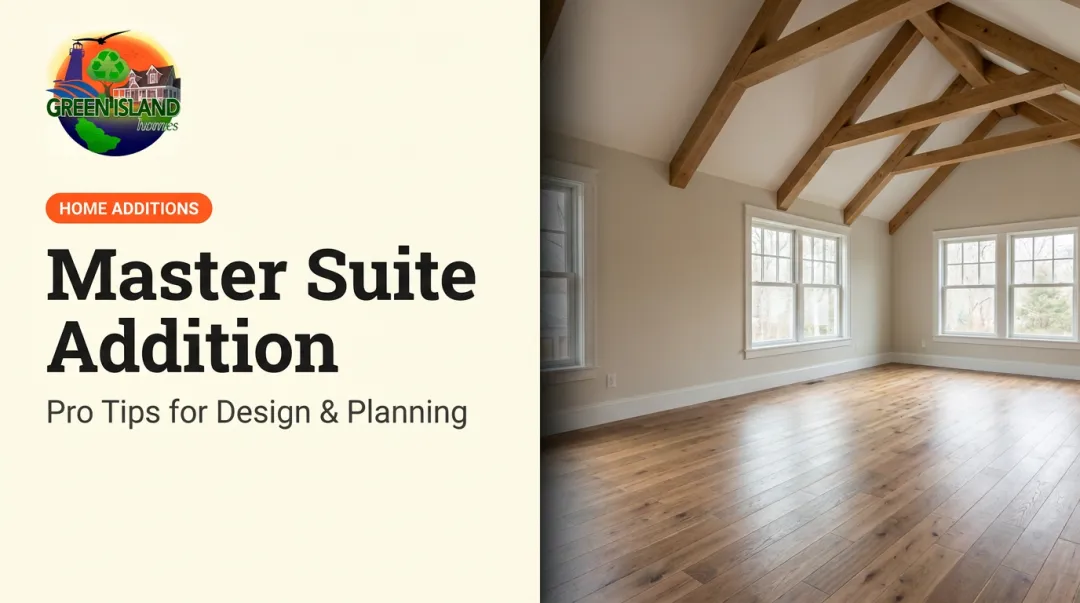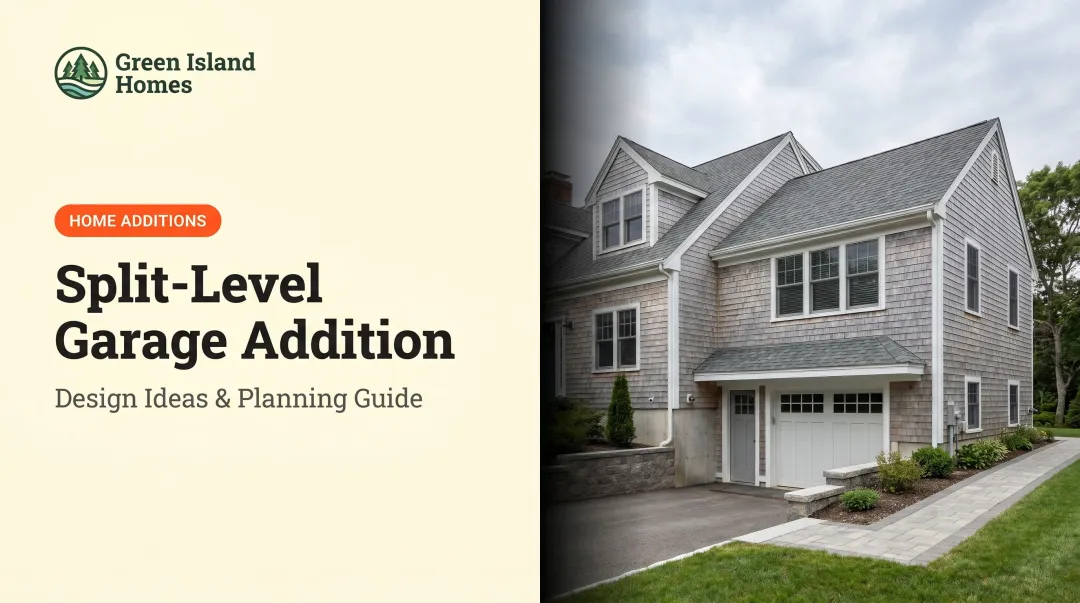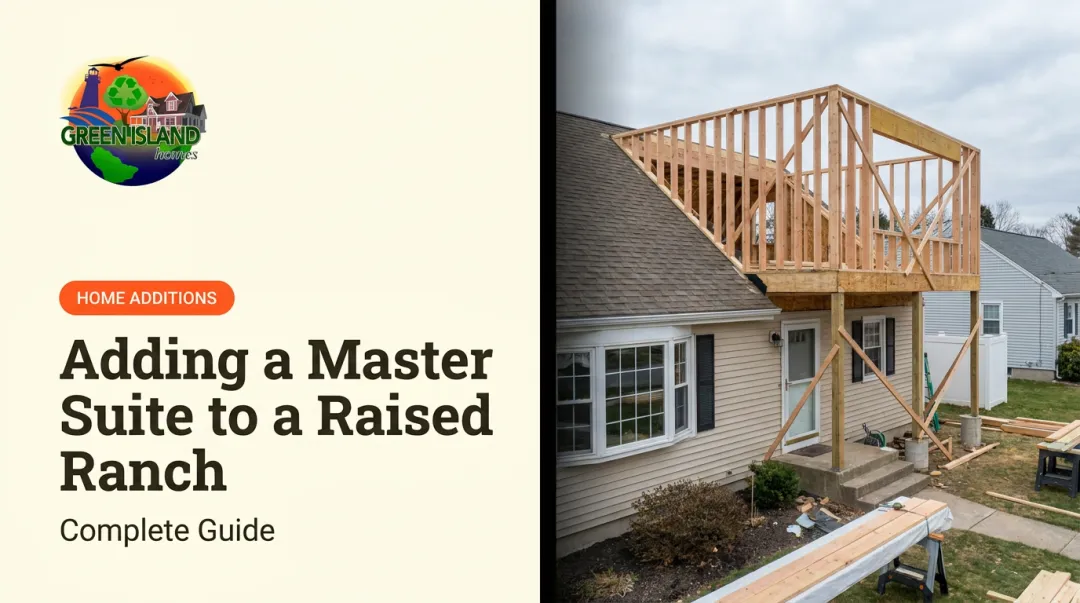

The challenge isn't that it can't be done. It's that split-level additions require structural planning that goes well beyond a standard room addition — and the gap between an experienced contractor and an inexperienced one shows up fast, usually in the budget.
This guide walks through the four main approaches to adding a master suite to a split-level home, what the addition should include, realistic costs, and the planning mistakes that derail projects before construction even starts.
Key Takeaways
- Adding a master suite to a split-level is possible but requires more structural planning than most other addition types
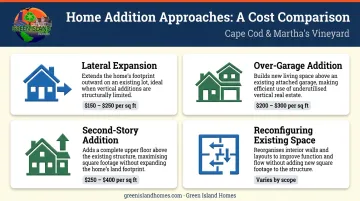
- Four main approaches: lateral expansion, over-garage addition, second-story addition, or reconfiguring existing space
- Full master suite costs typically range from $80,000 to $150,000+ depending on scope and structure
- New England midrange cost sits at $181,780 with only 38.8% recouped at resale, per the JLC 2025 Cost vs. Value Report
- Choosing the right contractor matters more here than on almost any other addition project
What Makes Adding a Master Suite to a Split-Level Home Uniquely Challenging
A split-level home is built on staggered floor plates — typically two to four half-levels offset by short flights of stairs. That layout creates real charm, and it's also what makes additions significantly harder to plan and build here than on a single-story or conventional two-story home.
Each Level Is Its Own Structural Zone
In a conventional home, load paths are relatively predictable. In a split-level, each floor plate sits at a different elevation, which means:
- New additions must connect to a specific level, not just "the house"
- Roof tie-ins happen at irregular heights, creating complex intersection points where water intrusion risk is highest
- Foundation work varies depending on which level you're building off
Stacking new construction onto any of these zones requires an engineer to assess load paths, existing connections, and soil conditions specific to that level.
The Friction Points Most Contractors Miss
According to Block Renovation's split-level addition guide, second-story work on split-levels often requires foundation reinforcement and roof reframing — work that contractors without split-level experience underestimate when bidding. Older split-levels also tend to reveal hidden surprises: outdated wiring, undersized panels, or foundation quirks that don't appear until walls open up.
Three specific friction points come up consistently:
- Limited footprint per level — less flexibility on suite placement than a ranch or colonial offers
- Plumbing and wiring zoned by level — significant rerouting is often required, not just extensions
- Complex rooflines — tie-in points must be engineered carefully to avoid long-term water and structural problems
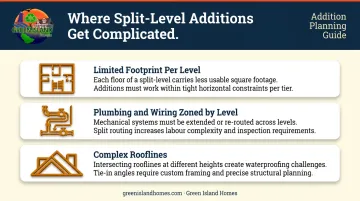
These aren't problems that surface in an estimate — they show up once demo starts. Choosing a contractor who has worked through split-level additions before is one of the more consequential decisions you'll make early in this process.
Four Ways to Add a Master Suite to a Split-Level Home
There's no universal solution here. The right approach depends on your lot size, existing structure, budget, and how much disruption you're willing to absorb during construction.
Lateral (Rear or Side) Expansion
Building out from the rear or side of the home is the most straightforward approach. You're adding a new footprint at the level of an existing floor — typically with new foundation or crawlspace, exterior framing, a roof extension, and an exterior tie-in.
This works well for split-levels that have usable yard space. The primary constraint is zoning. Setback rules in Cape Cod towns vary significantly:
- Barnstable: Side/rear setbacks as low as 10 ft in some residential districts
- Falmouth: Standard 10 ft side/rear setback for residential structures
- Yarmouth: R-40 zones require 20 ft side/rear setbacks
Industry estimates place lateral split-level additions at $150–$250 per square foot. Check your parcel's setbacks before comparing this option to any other — some lots rule it out entirely before cost becomes a factor.
Over-Garage Addition
If your split-level has an attached garage that sits lower than the main living area, the space above it is a natural candidate for a master suite. It's one of the most popular choices because it adds significant square footage without touching the existing footprint or consuming outdoor space.
What's required before committing to this approach:
- Structural assessment of the existing garage foundation and framing to confirm load capacity
- Vibration and sound isolation between the garage slab and the new floor above
- Dedicated HVAC zoning — garages create temperature extremes that bleed into poorly conditioned rooms above
- Plumbing runs from the main stack to the new bathroom location
The structural assessment isn't optional. Existing garage framing was designed to hold a roof, not a full living addition above it. A qualified engineer or experienced contractor should evaluate it before design begins.
Second-Story Addition
When the garage option isn't viable and your lot can't accommodate a lateral addition, building up becomes the path forward. Adding above an existing level is the most complex and most expensive route. It requires:
- Removing and reframing the roof over the targeted level
- Structural reinforcement of the floor below to handle the new load
- Staircase integration (placement affects the existing floor plan significantly)
- Full electrical, HVAC, and plumbing upgrades to service the new level
Second-story additions typically run $200–$300 per square foot — higher than lateral expansions because of the roof removal and structural work involved.
Expect more disruption during construction than any other approach.
Reconfiguring Existing Space
For homeowners working within tight budgets, reconfiguring is worth considering before committing to any structural addition. This means absorbing an adjacent bedroom, bonus room, or underused upper-level space into a larger master suite — without adding any square footage, new foundation, or roof work.
The trade-off is real. You're giving up a bedroom, which affects guest capacity and may reduce resale appeal for buyers who need that room count. This approach works best when the primary goal is private bathroom access rather than significant square footage gain — and when budget constraints make structural additions impractical.
What Your Master Suite Addition Should Include
Bedroom
JLC's 2025 Cost vs. Value Report defines a midrange primary suite addition as 24 ft × 16 ft (384 sq ft) — a useful benchmark that aligns with the practical range of 350–450 sq ft for a functional suite including bedroom, bath, and closet.
For the bedroom itself, plan around clearance requirements. A king bed needs at least 30 inches of clearance on the sides and foot — comfortable clearance is 36 inches. Door swing, circulation paths, and window placement all affect livability and need to be resolved in design before framing begins.
Ensuite Bathroom
This is what separates a master suite from a master bedroom addition, and it's the biggest cost driver in the project. A functional ensuite requires:
- Shower (minimum 3 ft × 4 ft for comfort)
- Vanity (double bowl adds value for daily use)
- Toilet compartment
- Waterproofing, tile work, and ventilation
- Dedicated plumbing runs
Don't oversize the bathroom at the expense of bedroom or closet space. A well-designed 80 sq ft bath with quality tile and a proper shower outperforms a sprawling one with an unused soaker tub every time.
Walk-In Closet
Minimum functional sizing is 5 ft × 5 ft (25 sq ft) with at least 36-inch aisles for movement. The ideal sequence is bed → closet → bath or bed → bath → closet — either keeps humidity from the shower away from clothing storage.
Systems and Utilities
Every master suite addition on a split-level will trigger at least some of the following:
- Electrical: Panel capacity review; new circuits for bathroom, HVAC, and lighting
- HVAC: New zoning or a dedicated mini-split for the addition
- Plumbing: New runs to the ensuite bathroom
The single most effective way to control costs here is to stack new plumbing as close to existing supply and drain lines as possible. In a split-level, where lines are already zoned by level, every additional foot of new plumbing run adds cost — and the distance to existing infrastructure can be significant.
Per NAHB's 2024 construction cost data, mechanical, electrical, and plumbing rough-ins account for roughly 19% of construction costs — about 6% each for plumbing, electrical, and HVAC. Budget accordingly: expect a similar split on your addition.
How Much Does a Master Suite Addition to a Split-Level Home Cost?
Realistic Cost Ranges
The JLC 2025 Cost vs. Value Report provides the strongest benchmark: the New England midrange primary suite addition costs $181,780, with a resale value recovery of $70,459 (38.8%). The national midrange is $170,517, recovering 32%.
For split-level-specific projects, Block Renovation puts master suite additions starting around $80,000, with per-square-foot ranges of:
| Addition Type | Cost Per Sq Ft |
|---|---|
| Lateral expansion | $150–$250 |
| Second-story addition | $200–$300 |
| Over-garage addition | Varies by structural condition |
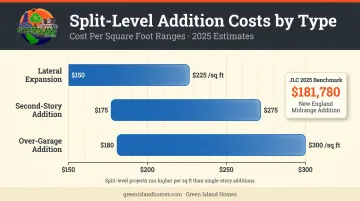
Split-level projects generally cost more per square foot than comparable additions on single-story homes, primarily because of the structural work at connection points and the complexity of tying into staggered levels.
What Drives Costs Up
- Structure and foundation: The largest variable. A lateral addition with new footings differs dramatically from an over-garage build requiring structural reinforcement
- Bathroom finishes: Tile, waterproofing, shower systems, and fixtures can range from modest to significant depending on selections
- Plumbing reroutes: Distance from existing lines directly affects this number
- Roofline complexity: Simple shed roofs cost less to frame and tie in than complex hip or gable intersections
Money-Saving Strategies That Actually Work
- Stack new plumbing near existing lines — this is the highest-impact cost decision on the project
- Keep the roofline simple on the addition; complex intersections add both framing and waterproofing cost
- Right-size the bathroom rather than maximizing it; 80–90 sq ft is functional for most households
- Use standard cabinet dimensions for vanities rather than custom millwork
- Hold a 10–15% contingency — split-levels have a documented tendency to surface hidden conditions once walls open
For Cape Cod and Martha's Vineyard homeowners, expect quotes toward the upper end of these ranges. Local labor and material costs run above national averages, so factor that into your budget before you finalize scope. Green Island Homes works with Cape Cod and Martha's Vineyard homeowners to build accurate project budgets from the start — so there are no surprises when bids come in.
Planning, Permits, and Common Mistakes to Avoid
What Permits and Regulations Apply
Every master suite addition in Massachusetts requires a building permit under 780 CMR — no exceptions. Construction without a permit can result in stop-work orders, required removal, and complications at resale. A Certificate of Occupancy is required before the space can legally be used. Only licensed master or journeyman professionals may perform plumbing or electrical work in Massachusetts — be cautious about any contractor who suggests otherwise.
For coastal properties on Cape Cod and Martha's Vineyard, additional reviews may apply:
- Wetlands Protection Act: Construction within 100 ft of a protected resource area requires a Notice of Intent filed with the local Conservation Commission
- Flood zones: Verify your parcel's FEMA designation before design begins
- Historic districts: Visible additions in a Massachusetts Local Historic District require review by the Historic District Commission before work proceeds
Check all of these before finalizing your design — discovering a conservation setback after you've drawn plans is an expensive and avoidable problem.
Timeline Expectations
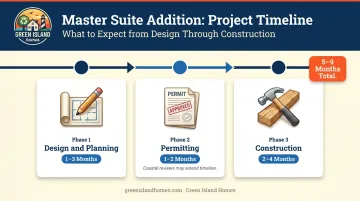
A realistic phase-by-phase breakdown:
- Design and planning: 1–3 months
- Permitting: 1–2 months (coastal reviews can extend this)
- Construction: 2–4 months depending on scope
Total: roughly 5–9 months from start to occupancy. Split-level projects can run toward the longer end of each phase due to structural complexity. In coastal New England, starting the design process in fall positions you well for spring construction — winter weather and contractor availability windows in this region affect scheduling more than in most markets.
Three Mistakes That Cost the Most
Skipping the split-level vetting question: Inexperienced teams underestimate the structural complexity and systems scope these projects involve. Budget overruns are hard to recover from once you're mid-construction.
Locking in design before checking zoning: Setback rules, lot coverage limits, and height restrictions vary by town and district. A lateral addition that looks ideal on paper can be stopped by a 20 ft rear setback you didn't verify first.
Underestimating MEP costs: Plumbing, electrical, and HVAC upgrades consistently represent 20–30% of total project cost on master suite additions. Treating them as minor line items during budgeting leads to shortfalls during construction.
Green Island Homes is fully licensed and insured, holds HomeAdvisor Elite Service designation, and has handled permit navigation across Cape Cod and Martha's Vineyard — including conservation and historic district reviews — on projects exactly like this one.
Frequently Asked Questions
Can you add a master suite to a split-level house?
Yes — it's done regularly. The four main approaches are lateral expansion, over-garage addition, second-story addition, or reconfiguring existing space. The right method depends on your lot, your home's structural layout, and your budget.
How much does a master suite addition to a split-level house cost?
Expect $80,000 to $150,000+ for a full suite. Structural complexity, bathroom finishes, and addition method are the primary cost drivers. The JLC 2025 Cost vs. Value Report puts the New England midrange at $181,780 — coastal markets like Cape Cod and Martha's Vineyard typically land at the higher end.
How much value does a master suite addition add to a split-level home?
The JLC 2025 Cost vs. Value Report shows New England midrange primary suite additions recovering 38.8% of cost at resale. NAHB research also found that 55% of house hunters prefer a layout with two primary bedroom suites — making it a marketable feature in competitive markets.
What is the difference between a master bedroom addition and a master suite addition?
A master bedroom addition adds sleeping space only — no plumbing required, lower cost. A master suite addition includes a private ensuite bathroom and typically a walk-in closet, making it more expensive but significantly more valuable for daily use and resale.
How long does it take to add a master suite to a split-level home?
Plan for 5–9 months total from design through construction. Permitting and structural complexity on split-levels can push timelines longer than simpler addition types, and coastal Massachusetts reviews add additional time in some cases.
Do I need to give up a bedroom to add a master suite to my split-level home?
It depends on the approach. Lateral additions and over-garage builds create entirely new space — no rooms sacrificed. Reconfiguring existing square footage typically requires absorbing an adjacent room, which reduces bedroom count and may affect resale value.