Whatever the motivation, a master suite addition is one of the most personal renovation decisions you can make. It's not just about square footage — it's about creating a private retreat that fits your life.
This post walks through three real transformation scenarios, the design features that define a stunning result, and what you should realistically budget for a project like this in coastal New England.
Key Takeaways
- A master suite addition means a bedroom, ensuite bathroom, and walk-in closet — the full package, not a single room
- Three common transformation types: bathroom bump-out, second-story addition, and ground-floor aging-in-place suite
- New England midrange projects average $181,780 per JLC's 2025 Cost vs. Value data — above the national benchmark
- Expect the ensuite bathroom to drive both the highest costs and the strongest resale returns
- Always hold a 10–15% contingency budget, especially on the Vineyard
What Makes a Master Suite Different from a Master Bedroom
The distinction matters for both your budget and your daily life.
A master bedroom addition adds sleeping space only — framing, drywall, flooring, and electrical. No plumbing, no tile work, no major structural complexity.
A master suite addition includes three components:
- A private bedroom
- An ensuite bathroom with dedicated plumbing
- A walk-in closet, often with custom built-ins
That combination is what buyers respond to. NAHB data shows 72% of both first-time and repeat buyers rate having both a shower and tub in the primary bath as essential or desirable, and 62% specifically want a double vanity.
Size, Scope, and Local Feasibility
A full master suite typically runs 300–500 sq. ft. of new finished space — enough for a comfortable bedroom, a walk-in closet, and an ensuite bath without feeling cramped.
On Cape Cod and Martha's Vineyard, feasibility depends heavily on your specific lot. Local zoning rules vary significantly by town:
- Barnstable: Side and rear setbacks vary by district
- Falmouth: Maximum lot coverage capped at 20% in most residential zones
- Martha's Vineyard towns: Each operates under its own bylaws
That complexity is why permitting knowledge matters from day one. Green Island Homes is based in Edgartown and works regularly within these local regulations, so scope conversations start on solid ground.
Before and After Transformation #1: Adding a Bathroom Bump-Out to an Existing Bedroom
The "Before" Scenario
This is the most common starting point in older Cape Cod and Martha's Vineyard homes: an adequately sized master bedroom, but no private bathroom. Owners share a hall bath with guests or children, and the closet is barely functional. These homes were built before ensuite bathrooms became standard — solid construction, designed for a different era.
The Solution
A rear or side bump-out — typically 10×13 to 13×13 feet — converts an existing window opening or exterior wall into the entry point for a new ensuite bathroom and walk-in closet. The bedroom itself stays largely untouched. You gain everything you're missing without rebuilding what's already working.
The "After" Transformation
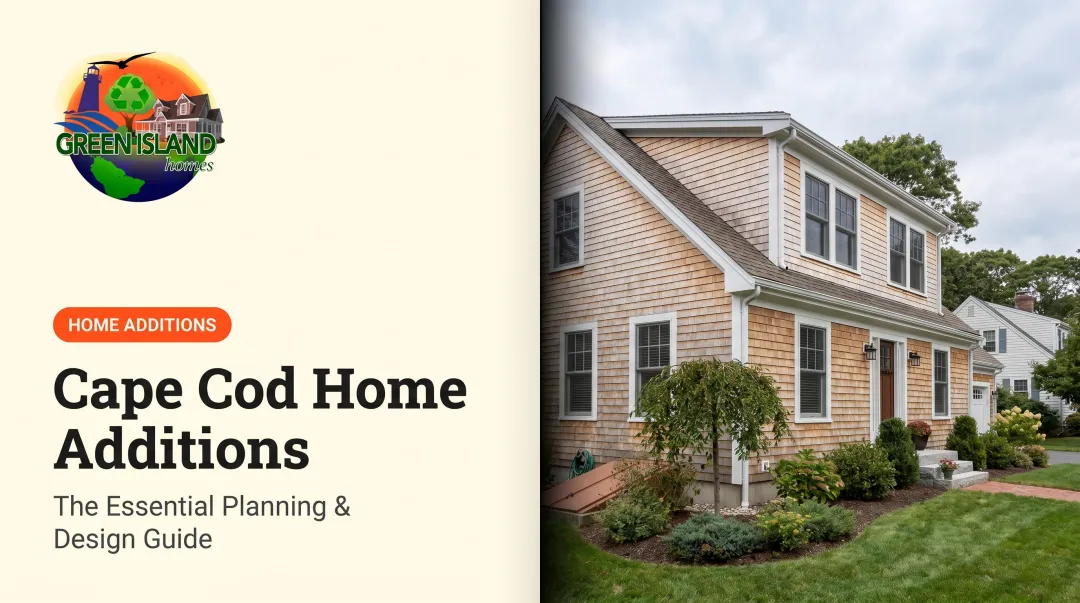
Outside, the addition should be invisible — matching shingles or siding, matching trim profiles, and a roofline that reads as part of the original structure. In architecturally sensitive coastal neighborhoods, this matters as much as the interior.
Inside, the transformation is dramatic:
- Dual vanities with quartz countertops, a tiled walk-in shower with glass enclosure, and a window positioned for natural light
- Walk-in closet connected directly from the bathroom or bedroom, with custom built-ins, double-hang rods, and motion-sensor LED lighting
- Coordinating tile selections, consistent hardware finishes, and built-in shelving that feels designed rather than retrofitted
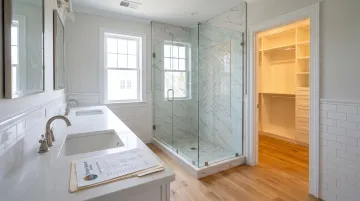
Getting these details right — particularly tile-to-countertop relationships and the shower enclosure finish — is what makes the difference between a room that functions and one that holds up aesthetically for decades.
For homeowners navigating this in Cape Cod or Martha's Vineyard, a contractor who handles all phases of construction and manages local permitting is essential. Green Island Homes manages full-scope addition projects across both markets, from permitting through final finishes.
Before and After Transformation #2: Second-Story Suite Addition Over Existing Living Space
The "Before" Scenario
Picture a single-story home — or a two-story where the primary bedroom shares a bathroom with kids or guests. There's no privacy separation between living and sleeping areas, no views from the bedroom, and no real sense of retreat.
The "After" Transformation
A second-story addition built over an existing room — a rear living area, home office, or attached garage — solves all of that at once. Done well, this transformation produces:
- Vaulted or high ceilings that make the space feel larger than its footprint
- A private balcony or walkout, particularly valuable on the Vineyard where treetop or water views reward the elevation
- Large windows positioned for both light and privacy
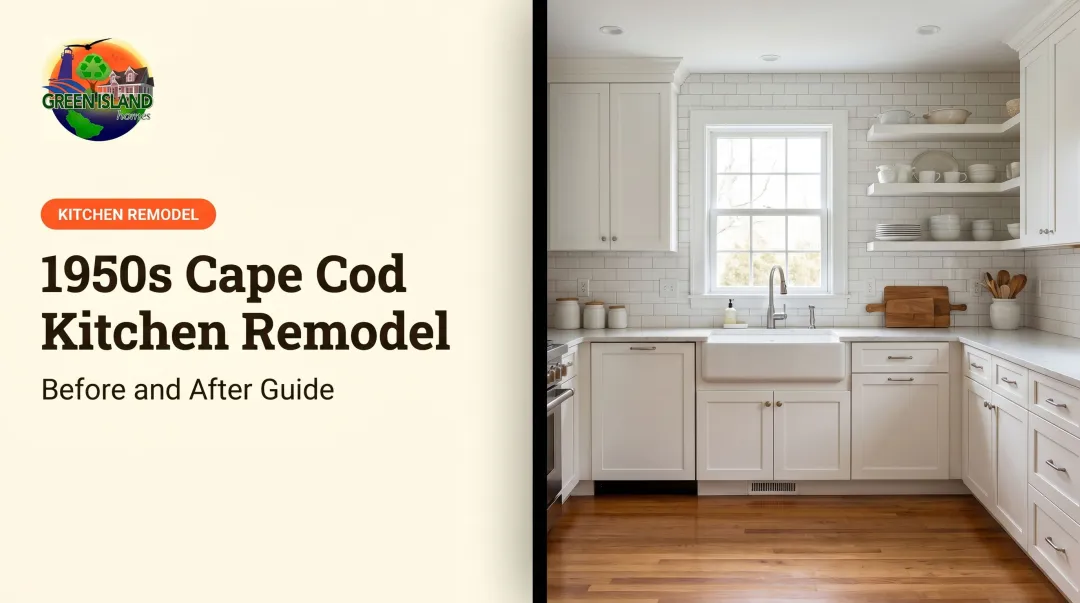
- A full ensuite with a double vanity, walk-in shower with stone or glass tile accents, and a freestanding soaking tub
- A full-wall walk-in closet with built-ins and high-CRI LED lighting
What Makes Second-Story Additions Structurally Complex
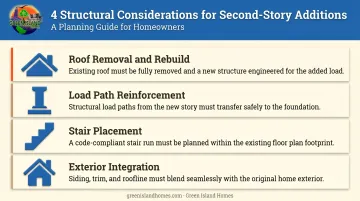
Second-story additions are structurally complex. Key considerations include:
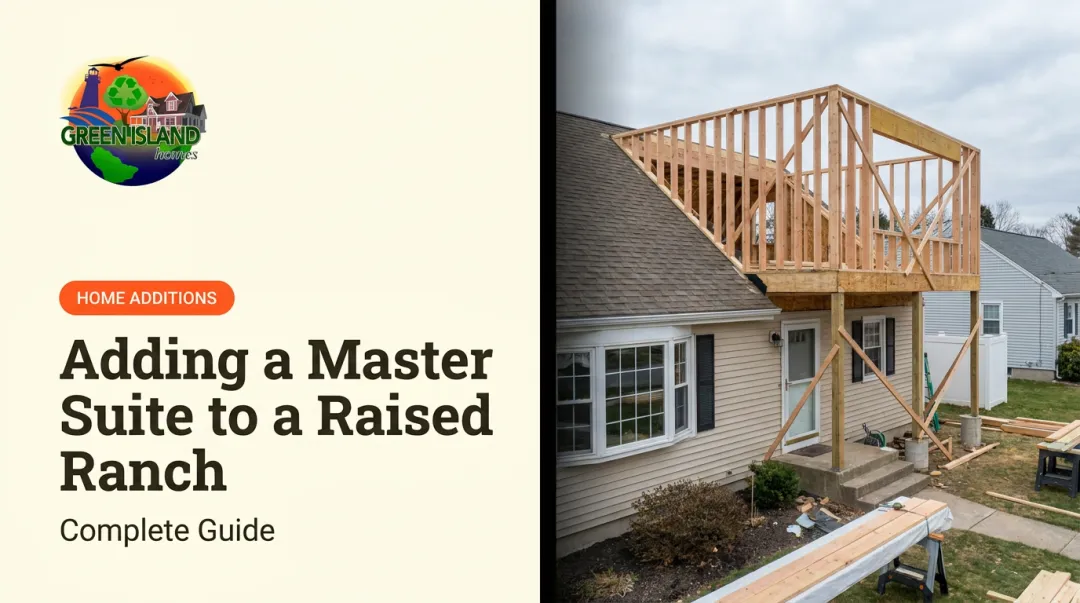
- Roof removal and rebuild — the existing roof comes off entirely or in sections, depending on scope
- Load path reinforcement — many single-story homes weren't built to carry an additional floor; foundation and framing upgrades may be required
- Stair placement — where you put the stairs affects both the first-floor layout and the flow of the new upper level
- Exterior integration — the roofline, window proportions, and siding must read as original; a visible seam between old and new is the most common aesthetic mistake
HomeAdvisor's 2025 data puts second-story additions at an average of $175,000 nationally, with complex projects reaching $600,000. In coastal New England markets, plan for the higher end of that range.
Before and After Transformation #3: Ground-Floor Suite Addition for Aging in Place
The "Before" Scenario
A two-story home where the master bedroom is upstairs. For empty nesters, homeowners planning ahead, or anyone who's had a knee surgery and reconsidered their floor plan, those stairs start to feel less optional.
The "After" Transformation
A single-story rear addition creates a self-contained master suite on the main floor. Accessibility is built in from day one, not added as an afterthought:
- Curbless shower with a wide entry and slip-resistant flooring
- Doorways sized to at least 32 inches of clear passage per AARP HomeFit guidelines
- Lever-style hardware throughout, easier to operate and cleaner-looking than knobs
- Wide circulation paths between furniture zones
These features set the functional baseline. From there, the design goal is a suite that looks like a luxurious retreat, not a medical accommodation. With the right finishes — quality tile, custom cabinetry, layered lighting — nothing reads as institutional.
Why This Works Particularly Well on the Cape and Vineyard
Many homeowners here host family regularly, especially during summer. A ground-floor suite serves double duty: a private primary suite for most of the year, and an independent guest suite with its own bath when the house fills up. That flexibility is a real lifestyle advantage that a second-floor bedroom simply can't replicate.
NAHB's 2023 aging-in-place data confirms demand is growing — 75% of remodelers report that homeowners requesting these projects are typically 65 and older, and 98% say most consumers are now familiar with aging-in-place design.
Key Design Features That Define a Stunning Master Suite
The Ensuite Bathroom
The bathroom is where budget goes — and where visual impact is made. Priorities in order of both cost and return:
- Walk-in shower sized at 36"×36" minimum per NKBA guidelines — most master suite projects go larger for comfort
- Double vanity, which 62% of buyers rate as essential or desirable
- Heated flooring, cited as in-demand by 57% of respondents in NKBA's 2025 Bath Trends Report
- Porcelain tile as the practical baseline; stone accent tile at the shower adds visual weight without blowing the budget; full marble is a luxury-tier decision that significantly affects cost
Per the same NKBA report, 83% of homeowners seek vanities with customizable storage modules. Built-in organization has moved from optional to expected.
The Walk-In Closet
A well-designed closet transforms a daily routine. A well-designed closet transforms a daily routine. Features that make the biggest difference:
- Adequate aisle width for comfortable movement
- Double-hang sections to maximize space for shorter garments
- Adjustable shelving that adapts as storage needs change
- Motion-sensor LEDs so nothing gets lost in a dark corner
- Central island or built-in shoe storage for larger footprints
NAR's 2025 Remodeling Impact Report puts closet renovation cost recovery at 83% — one of the stronger return figures across all remodeling categories.
Bedroom-Level Details
These don't cost as much as the bathroom but change how the room feels:
- Vaulted or coffered ceilings create height and character
- Large windows positioned for morning light and privacy from neighbors
- Layered lighting: dimmable recessed, sconces at nightstands, and a reading lamp or two
- A small sitting zone near a window, even if it's just two chairs and a side table
Master Suite Addition Costs and Home Value on Cape Cod and Martha's Vineyard
What the Numbers Actually Say
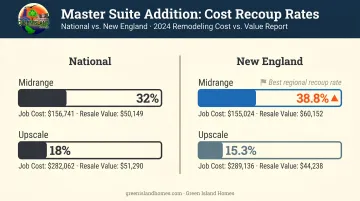
Remodeling Magazine's 2025 Cost vs. Value Report offers the closest verified regional benchmarks:
| Geography | Tier | Job Cost | Resale Value Added | Cost Recouped |
|---|---|---|---|---|
| National | Midrange | $170,517 | $55,097 | 32% |
| New England | Midrange | $181,780 | $70,459 | 38.8% |
| Boston, MA | Midrange | $183,267 | $71,779 | 39.2% |
| National | Upscale | $351,613 | $63,136 | 18% |
| New England | Upscale | $374,737 | $57,321 | 15.3% |
New England midrange projects recoup nearly 39 cents on the dollar, outperforming the national average by a notable margin. Cape Cod and Martha's Vineyard aren't broken out separately, but these figures are the closest verified regional proxy.
Project costs on the Vineyard typically run above even the New England averages. Labor availability is tighter, and getting materials to the island via Steamship Authority freight adds both time and cost to every job.
The Biggest Cost Variables
- Bathroom plumbing and tile work: the single largest variable. Custom tile showers cost considerably more than a prefab pan with a tiled surround.
- Structural work: second-story additions require roof removal and potential foundation reinforcement; ground-floor bump-outs are less complex but still involve foundation work.
- HVAC zoning: a new suite needs its own zone, and costs depend heavily on your existing system's capacity.
- Finish level: builder-grade versus high-end finishes in a master bath alone can swing the budget by $30,000 or more.
Money-Saving Strategies That Don't Sacrifice Quality
- Stack new plumbing near existing lines to minimize pipe runs
- Keep roof forms simple on second-story additions — complexity adds cost fast
- Use a prefab shower pan with a tiled surround instead of a fully custom tiled floor
- Specify standard vanity cabinet sizes and customize with hardware and countertops instead
- Hold a 10–15% contingency — unexpected finds inside walls or beneath floors are common in older Cape Cod homes
Frequently Asked Questions
How much does a 20×20 master suite addition cost?
A 400 sq. ft. addition falls within a wide range depending on type and finish level. New England midrange projects average around $181,780 according to JLC's 2025 data, with second-story additions running higher than ground-floor bump-outs due to structural complexity. Martha's Vineyard projects typically exceed regional averages.
How much value does adding a master suite add to a home?
In New England, a midrange primary suite addition recoups roughly 38.8% of project cost at resale according to JLC's 2025 data — better than the 32% national average. The ensuite bathroom is the primary value driver; a bedroom-only addition adds less.
What's the difference between a master suite addition and a master bedroom addition?
A master bedroom addition adds sleeping space only — framing, drywall, flooring, electrical. A master suite addition adds an ensuite bathroom and walk-in closet on top of that, raising cost significantly but delivering far greater daily comfort and resale value.
How long does a master suite addition take to complete?
Ground-floor bump-out additions typically take 2–4 months of construction. Second-story additions run 4–6 months or longer. Angi notes that planning and design alone for larger additions can take 3–4 months, and local permitting on Cape Cod and Martha's Vineyard adds time to the timeline.
Should I add a master suite on the ground floor or second story?
Ground-floor additions cost less, suit aging-in-place needs, and work well when yard space allows. Second-story additions make sense when the lot is tight, when privacy from the main living level matters, or when the neighborhood calls for a two-story profile.