
A well-planned small kitchen remodel can do more than improve daily life. According to the 2025 Cost vs. Value Report from the Journal of Light Construction, a midrange minor kitchen remodel in New England returns 134.3% of its cost at resale — one of the strongest ROI figures in residential renovation.
This guide covers the full picture: layout decisions, storage solutions, design tricks, appliance choices, and how to prioritize your budget. Whether you're after quick wins or a full renovation, the strategies here apply directly to the kinds of homes common across the Cape and Vineyard.
Key Takeaways
- Layout changes have the highest impact, but require a structural assessment before touching any walls
- Storage upgrades — pull-out drawers, pantry fillers, wall mounts — offer strong buyer appeal at relatively low cost
- Light colors, reflective surfaces, and layered lighting can transform how a small kitchen feels without moving anything
- Right-sized and panel-ready appliances free up visual and physical space
- Minor remodels in New England return over 134% at resale — prioritize those first
Layout Changes That Make the Biggest Impact
Before picking paint colors or new cabinet hardware, evaluate the floor plan. No amount of styling fixes a kitchen that doesn't work.
Opening Up the Space
Removing a non-load-bearing wall between the kitchen and dining or living room can transform how a small kitchen feels — light travels further, the space reads as part of a larger room, and cooking becomes less isolating. That said, every wall removal requires a structural assessment first. Massachusetts residential code mandates permits for the substantial cutting away of any wall or partition, regardless of whether it appears load-bearing.
If full wall removal isn't feasible, two lower-impact alternatives achieve similar results:
- Pass-through opening — removes a section of wall to visually connect rooms without structural overhaul
- Counter overhang — extends the countertop into the adjacent space; add barstools for casual seating
Rethinking the Kitchen Footprint
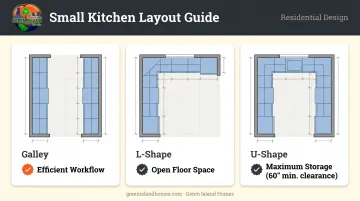
Three layouts consistently outperform others in small kitchens:
- Galley — two parallel runs of cabinetry and counters; efficient workflow, maximizes wall storage
- L-shape — frees up floor space, works well in open-plan settings
- U-shape — maximum storage and counter frontage, though it requires at least 60 inches of clearance between opposing walls per NKBA guidelines
One underused option: replacing a traditional table-and-chairs setup with a built-in banquette. A corner bench with under-seat storage reclaims floor space while hiding bulky or seasonal items — a practical fit for cottage-style homes where storage is scarce everywhere.
Structural changes — wall removal, plumbing relocation, custom built-ins — need a licensed contractor involved early. Green Island Homes works with Cape Cod and Martha's Vineyard homeowners on exactly these decisions, helping assess what's structurally and practically feasible before locking in a plan.
Smart Storage Solutions That Reclaim Every Inch
In a small kitchen, every wall, corner, and cabinet interior is usable storage. The goal is to stop treating any surface as passive space.
Vertical and Wall-Mounted Storage
Replacing upper cabinets with open shelving is one of the fastest ways to reduce the heavy, boxed-in feel of a traditional kitchen. Open shelves make everyday dishware and dry goods visually accessible while expanding the perceived ceiling height.
Beyond shelving, wall-mounted options add storage without consuming floor space:
- Pegboards for pots, pans, and utensils
- Ceiling-mounted pot racks above an island or prep zone
- Hooks or rods on the underside of upper cabinets for mugs and wine glasses
Each of these frees up cabinet space for harder-to-store items while keeping the most-used tools within reach.
Inside-Cabinet and Pantry Optimization
The interior of existing cabinets often holds far more than homeowners realize — with the right inserts. Pull-out drawers, lazy Susans, and tiered shelf organizers can dramatically increase functional capacity without touching a single wall.
Research supports this: according to 2024 Houzz data, 66% of renovating homeowners chose pull-out waste and recycling drawers, 55% added cookie sheet organizers, and 74% rated pull-out shelves as essential or desirable.
Two more upgrades worth considering for compact kitchens:
- Pull-out pantry column beside the refrigerator — a narrow vertical unit with shelving on both sides for dry goods, spices, and oils
- Rolling island that adds counter surface and storage, tucks away when not needed, and can move to another room in open-plan layouts
- Under-cabinet pull-out trays for cutting boards, baking sheets, or cleaning supplies
Color, Light, and Decor Tricks That Make a Small Kitchen Feel Bigger
Light, color, and surface finishes are among the most cost-effective ways to transform how a small kitchen feels — no wall removal required.
Using Color and Finish Strategically
Monochromatic, light-toned color schemes applied consistently across walls, cabinets, and flooring create visual continuity. When the eye isn't jumping between competing colors and textures, the space reads as larger and more cohesive. Benjamin Moore notes that pale and pastel colors above eye level create an airy effect that visually heightens walls — useful in kitchens with lower ceilings.
For cabinet finishes, two approaches work particularly well in small kitchens:
- High-gloss paint bounces light around the room and adds a sense of depth
- Two-tone cabinets (lighter uppers, slightly darker or warmer lowers) add dimension without visual clutter
Flooring matters too. Diagonally laid tile, large-format planks, or geometric patterns can visually widen a narrow kitchen. Removing cabinet door handles creates cleaner sightlines and a subtly more spacious feel.
Lighting and Reflective Surfaces
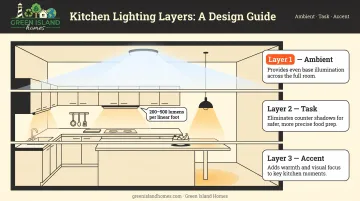
Small kitchens benefit from three distinct lighting layers working together:
- Ambient lighting from overhead fixtures evenly fills the room
- Task lighting via under-cabinet strips above prep zones (Kichler recommends 200–500 lumens per linear foot)
- Accent lighting from pendants or sconces adds warmth and personality
Brighter, well-distributed light makes a space feel larger almost immediately. For reflective surfaces, glossy or zellige tile backsplashes, polished hardware, and mirrored accents bounce light without the safety concerns of actual glass behind a cooking surface. LED lighting is worth specifying throughout — LEDs use at least 75% less energy and last up to 25 times longer than incandescent bulbs, making them a practical long-term upgrade in any kitchen remodel.
Choosing the Right Appliances for a Small Kitchen
Every appliance should earn its footprint. That means favoring right-sized, built-in, and multifunctional options over standard full-size models that can overwhelm a compact space.
Space-Conscious Appliance Options
| Appliance | Space Benefit | Approximate Dimensions |
|---|---|---|
| Undercounter refrigerator | Frees up wall space | 34"H × 20–24"W × 18–26"D |
| Over-the-range microwave | Clears countertop | ~30"W × 17"H × 15–18"D |
| Compact dishwasher (18") | Saves 6" vs. standard | ~32.5"H × 17.75"W × 22.5"D |
| Slide-in range | Cleaner sightlines | Same footprint, flush fit |
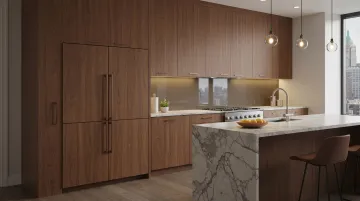
Panel-ready and flush-mount installations let appliances blend into cabinetry almost invisibly — a detail that matters more in small kitchens than large ones. The NKBA 2026 Kitchen Trends report projects panel-faced dishwashers gaining popularity among 85% of respondents and panel-faced refrigeration among 72%.
Multifunctional countertop appliances — air fryer-toaster oven combos, multi-cookers — can replace several single-purpose tools and reduce what needs to be stored. Matching appliance size to actual household needs — not builder-standard sizing — is often where compact kitchens quietly gain back the most usable space.
How to Prioritize Your Small Kitchen Remodel
Not all kitchen improvements require the same investment or carry the same risk. Knowing where to start saves both money and frustration.
Cosmetic vs. Structural Updates
The clearest dividing line in kitchen remodeling:
- Cosmetic updates (paint, hardware, lighting, open shelving) — high impact, low cost, reversible. Cabinet refinishing runs $1,900–$4,500; refacing runs $4,270–$10,200 according to HomeAdvisor's 2025 data
- Structural renovations (layout changes, custom cabinetry, plumbing moves) — higher investment, longer-lasting results, require permits and licensed contractors
A sensible approach: tackle cosmetic changes first. Living with updated lighting and open shelving for a few months often clarifies whether a layout change is genuinely necessary or whether the space simply needed better organization and light.
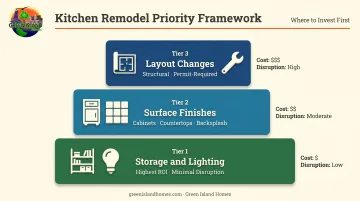
A Tiered Prioritization Framework
- Start with storage and lighting — highest ROI per dollar, minimal disruption
- Move to surface finishes — cabinets, countertops, backsplash
- Address layout changes last — only if budget and structural conditions support it
For older homes — which make up a significant portion of Cape Cod and Martha's Vineyard housing stock — a contractor walkthrough before planning is important. Three issues come up regularly:
- Lead-based paint: Pre-1978 homes may contain it; sanding or demolition creates hazardous dust (per EPA guidelines)
- Knob-and-tube wiring: Common from the 1880s through the 1940s; becomes a fire hazard when insulation is added around it
- Galvanized steel pipes: Useful life of roughly 20–30 years and difficult to assess from the exterior
None of these are deal-breakers, but catching them early prevents cost surprises mid-project. Green Island Homes works with homeowners across Cape Cod and Martha's Vineyard on exactly these kinds of projects — navigating the specific constraints of older coastal homes with fair pricing and reliable project communication.
Frequently Asked Questions
Frequently Asked Questions
What's the average price to remodel a small kitchen?
Cosmetic updates (paint, lighting, hardware) run from a few hundred to several thousand dollars, while a minor remodel typically falls between $10,000–$20,000. Full renovations with new cabinetry, appliances, and layout changes can reach $15,000–$65,000 or more. Get local contractor estimates — costs on Cape Cod and Martha's Vineyard often differ from national averages.
What kitchen colors are trending for 2026?
The NKBA's 2026 report shows neutrals expected by 96% of designers, greens by 86%, and blues by 78%. Warm earthy tones like Sherwin-Williams' Universal Khaki and Benjamin Moore's Silhouette are current color-of-the-year selections. Monochromatic light schemes remain a popular choice for making small kitchens feel larger.
How do I make a small kitchen feel bigger without renovating?
Use light colors throughout, swap upper cabinet doors for open shelving, add reflective surfaces (glossy tile, polished hardware), layer lighting with under-cabinet task strips, and clear countertops by moving items to wall-mounted or vertical storage. These changes are low-cost and immediately noticeable.
Should I remove upper cabinets in a small kitchen?
Yes, but with a caveat. Open shelving can make a small kitchen feel more open and airy — as long as there's sufficient closed storage elsewhere and the homeowner can keep a tidy, curated display. Clutter on open shelves has the opposite effect.
What layout works best for a small kitchen?
Galley and L-shaped layouts are generally the most efficient — both minimize wasted movement and maximize wall space for cabinetry. A connected open-plan layout or pass-through can also help a small kitchen feel less enclosed.
Do I need a permit for a small kitchen remodel?
Cosmetic changes typically don't require permits. Structural changes — removing walls, moving plumbing or electrical, adding ventilation — almost always do under Massachusetts residential code. Work with a licensed local contractor to confirm permit requirements for your specific scope and municipality.