
Key Takeaways
- Cape Cod kitchens are compact and historically closed-off; opening the layout delivers more impact than any finish upgrade
- Shaker-style cabinets in white or off-white remain the safest, most resale-friendly choice; quartz countertops handle coastal humidity well
- A peninsula beats a full island in most Cape Cod kitchens — more storage, less floor space required
- With the 2025 Cape Cod single-family median at $790,000, a well-executed kitchen remodel directly protects and builds home value
- Budget tiers range from a cosmetic refresh under $10K to a full gut remodel well above $30K in the Massachusetts market
What Makes a Cape Cod Kitchen Unique
Cape Cod homes trace back to late-17th-century Massachusetts — compact, one-story rectangular structures with low ceilings and a central chimney. Historical documentation shows the original kitchen occupied the rear of the house, flanked by two front rooms. That layout made sense for colonial life. For modern entertaining, it's a problem.
The structural DNA of these homes creates a specific set of remodeling challenges:
- Tight footprint with minimal room for reconfiguration
- Load-bearing walls often sitting exactly where you'd want an open passage to the living room
- Low natural light from small, older windows — especially in rear-facing kitchens
- Older plumbing and electrical that often needs updating during a full remodel
- Coastal exposure to salt air and humidity, which accelerates wear on materials that can't handle salt and moisture
A Cape Cod kitchen remodel demands more planning than a cosmetic update on a newer home — but each of these challenges has a workable solution.
Why the Effort Is Worth It
When done right, these kitchens have real appeal — a cozy scale, classic New England character, and strong potential to blend coastal charm with modern function. In a market as competitive as Cape Cod's, where inventory sits at just 2.0 months of supply and homes are selling at 95.2% of original list price, a thoughtfully remodeled kitchen doesn't just improve daily life. It can meaningfully increase what buyers are willing to pay.
Key Design Elements for a Cape Cod Kitchen Remodel
Cabinetry: The Heart of the Look
Cabinetry sets the tone for everything else. According to the 2025 Houzz Kitchen Trends Study, Shaker-style doors led all cabinet styles at 61%, and white remained the top cabinet color at 33%, with off-white adding another 14%. For Cape Cod kitchens, that data aligns well — white and off-white Shaker cabinets are bright, timeless, and broadly appealing to the resale market.
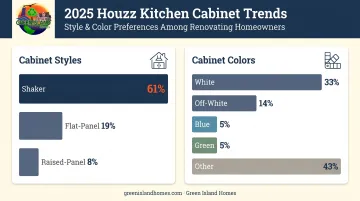
Blue and green accents are gaining ground too (5% each nationally), which tracks with the coastal palette common in Cape homes. A two-tone approach — white uppers, a soft navy or sage lower cabinet on an island or peninsula — adds personality without committing to a full color overhaul.
Budget-conscious options worth considering:
- Paint existing cabinet boxes and replace only the doors
- Add new hardware (long bar pulls in brushed nickel or matte black create an elevated look at low cost)
- Mix closed cabinets with open shelves or glass-front uppers to lighten the visual weight in a small kitchen
Countertops and Backsplash
Once the cabinet style is set, countertops and backsplash define the rest of the surface palette. Quartz is the practical choice for coastal kitchens: it resists moisture, requires no sealing, and won't stain — a real advantage where humidity is constant. Houzz data puts engineered quartz at 39% of kitchen remodels nationally, making it the top countertop material by a wide margin.
Natural marble is beautiful, but in vacation homes or coastal properties, the maintenance demands are harder to justify. A Carrara-look quartz delivers the same aesthetic without the upkeep.
For backsplash, classic Cape Cod choices include:
- White subway tile (reliable, bright, easy to clean)
- Soft gray geometric tile for a modern-coastal hybrid
- Ceramic mosaics in sea glass tones for a more expressive coastal statement
- A full-height slab backsplash behind the range as a focal point
Flooring and Lighting
Flooring: Hardwood — particularly oak or maple — creates warmth and flows naturally from the kitchen into adjacent living spaces, which matters when opening up a previously closed floor plan. Wide-plank vinyl plank is a strong alternative: highly resistant to moisture and mold, and increasingly mainstream. Houzz reports vinyl/resilient flooring at 22% of remodels — nearly level with hardwood at 21% — reflecting how far the product has come in quality and appearance.
Lighting: Layered lighting makes a small kitchen feel larger and more functional. The most-used combination across remodels:
- Recessed ceiling lights (73% of remodels) for general illumination
- Under-cabinet LED strips (71%) for task lighting without a full electrical rewire
- Pendant lights (57%) over a peninsula or island — classic jar-style or lantern pendants suit the Cape Cod aesthetic well
Layout Solutions for Small Cape Cod Kitchens
New cabinet doors and a fresh backsplash can improve a kitchen's appearance. But if the layout hasn't changed, you're still cooking in a closed box. For most Cape Cod homeowners, the most impactful remodel decision isn't a material — it's a spatial one.
Opening the Floor Plan
Removing or modifying a wall between the kitchen and living room transforms the way a small home functions. A full removal creates seamless flow; a partial removal creates a pass-through that improves light and connection while preserving a wall surface on the living room side for furniture placement.
One important caveat: many walls in Cape Cod homes are load-bearing. Before removing anything, make sure you address:
- A structural engineer assessment to specify the correct beam
- Massachusetts building permits for any wall alteration
- A licensed contractor familiar with local code requirements
Skipping these steps creates liability and real safety risk.
The investment is real, but so is the payoff. NAHB research found that 85% of home buyers want an open kitchen-dining arrangement and 79% want an open kitchen-family room connection — making wall removal one of the most buyer-aligned changes you can make.
Peninsula vs. Island
In a compact Cape Cod kitchen, a peninsula almost always outperforms a full island. Here's why:
| Feature | Peninsula | Island |
|---|---|---|
| Floor space required | Less — attaches to existing cabinetry | More — requires clearance on all sides |
| NKBA aisle clearance needed | 42" for one cook, 48" for two | Same, but on more sides |
| Storage added | Yes — can use existing cabinet run | Yes — but adds more cost |
| Casual seating | Counter stools on open side | Counter stools all around |
| Cost | Lower — extends existing layout | Higher — new freestanding unit |
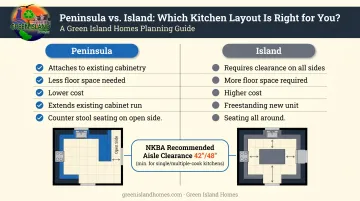
A peninsula built with upper cabinets as its base and a quartz or butcher block top covers prep space, storage, and casual seating without dominating the room. For Cape Cod homes used for seasonal entertaining, that's a hard combination to beat.
Maximizing Natural Light
Once the layout is sorted, lighting is the next lever. Even modest changes make a Cape Cod kitchen feel noticeably more open:
- Replace solid or small-paned exterior doors with full-view or glass-panel doors leading to a deck
- Widen or replace older windows with energy-efficient casement windows
- Choose lighter cabinet and wall colors — they reflect available light instead of absorbing it
- Remove upper cabinets on one wall and replace with open shelving to prevent visual blockage
Bringing Coastal Character to Life
The Cape Cod aesthetic isn't about nautical kitsch. It's about a relaxed, light-filled space that feels connected to the region — understated, durable, and welcoming. That character comes through in the details: color, materials, and the small finishing choices that add up.
Start with whites and off-whites for walls and upper cabinets — they anchor the space without feeling stark. Soft blues (slate, seafoam, navy), warm creams, and sandy beiges work well as accents. Keeping the palette consistent between the kitchen and adjacent living or dining areas makes the whole home feel larger, which matters in a compact Cape layout.
A few finishing touches go a long way without a major budget impact:
- Beadboard paneling on cabinet toe kicks or a kitchen island
- Brass or brushed nickel hardware with a nautical or cottage profile
- A farmhouse apron sink — one of the most recognizable Cape Cod kitchen details
- Simple linen or natural fiber window treatments that soften the space without blocking light
Seating should lean toward natural materials — weathered wood, wicker, rattan. Counter stools in these finishes tie the kitchen back to the broader coastal feel of the home. Where a full dining table won't fit, a breakfast nook with a built-in bench and cushion adds both charm and practical seating without eating up floor space.
Budgeting for Your Cape Cod Kitchen Remodel
Cape Cod remodeling costs sit above national averages. Massachusetts kitchen remodel data from Fixr puts the statewide average around $33,000, with a wide range depending on scope. The most useful regional benchmark comes from the JLC/Remodeling 2024 Cost vs. Value report, which tracked a minor midrange kitchen remodel in New England at a $27,492 job cost with 96.1% cost recouped — the strongest ROI figure available for this market.
Here's a practical three-tier framework:
| Tier | Scope | Estimated Range |
|---|---|---|
| Cosmetic refresh | Paint, hardware, backsplash, new lighting | Under $10,000 |
| Mid-range remodel | New cabinets, countertops, appliances, flooring | $25,000–$50,000+ |
| Full gut remodel | Layout changes, wall removal, plumbing, electrical, all-new surfaces | $50,000–$100,000+ |
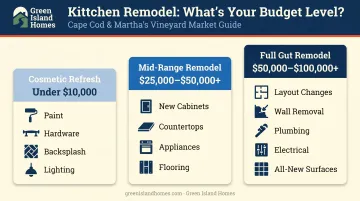
Ranges reflect Massachusetts market context. Cape Cod and Martha's Vineyard projects may exceed these figures depending on site conditions, access, and project complexity.
Highest-ROI Upgrades on a Constrained Budget
If you're preparing to sell or working within a tight budget, these upgrades consistently deliver strong visual impact per dollar spent:
- Cabinet painting + new hardware — national average around $940 for painting; hardware can be done for a few hundred dollars
- New lighting fixtures — pendant and under-cabinet lighting refresh the look without major electrical work
- Fresh backsplash — ceramic tile is the most affordable route; it changes the feel of a kitchen faster than almost any other surface update
In a market where median home values have climbed from $433,000 in 2019 to nearly $790,000 in 2025 — with single-family homes selling at 95.2% of list price — a well-maintained, updated kitchen directly supports your asking price.
Green Island Homes serves Cape Cod and Martha's Vineyard homeowners through every phase of a kitchen remodel. For an accurate estimate, reach them at 774-563-9714 or sales@greenislandhomes.com.
Frequently Asked Questions
Can I redo my kitchen for $10,000?
A full gut remodel is unlikely at that budget in the Cape Cod market. A meaningful cosmetic refresh — new paint, backsplash, hardware, and updated lighting — is very achievable for around $10,000 and can dramatically change how the kitchen looks and feels.
What cabinet color is outdated?
Honey oak, dark espresso, and all-black cabinets are currently considered dated. White, off-white, and soft gray remain timeless and broadly appealing for resale in the Cape Cod market. Blue and green accents are gaining ground as popular secondary tones.
What is the 3x4 kitchen rule?
The "3x4 rule" is another name for the kitchen work triangle — the layout relationship between your stove, sink, and refrigerator. NKBA guidelines recommend a total triangle distance under 26 feet, with each leg between 4 and 9 feet for efficient movement.
What makes a Cape Cod kitchen different from other styles?
The compact footprint, historically closed rear layout, and coastal New England aesthetic set it apart — light painted cabinets, beadboard details, natural materials, and a relaxed, welcoming scale that reflects the region's character rather than following a generic design trend.
How long does a Cape Cod kitchen remodel typically take?
A cosmetic refresh typically takes 1–2 weeks. A full gut remodel with layout changes — wall removal, new plumbing, electrical updates — generally runs 8–12 weeks, not including lead times for custom cabinets and appliances, which can add several more weeks.
Is removing a wall in a Cape Cod kitchen worth it?
For most Cape Cod homes, yes. Opening the kitchen to the living space is the single highest-impact change available — it improves light, flow, and perceived square footage in ways that finishes alone cannot achieve. The key is doing it with proper structural engineering and permits in place.