That hesitation is reasonable, but it's also solvable. A garage addition can absolutely complement a Colonial home — and in a climate like Cape Cod or Martha's Vineyard, where temperatures drop below freezing for more than 100 days a year, having one matters more than aesthetics alone.
This guide covers the design approaches that work best for Colonial architecture, the exterior details that need to carry over, how to navigate permits and local historic review, and what to budget realistically.
Key Takeaways
- Attached side-entry garages preserve the symmetrical Colonial front façade and are usually the best place to start
- Detached carriage-house garages cost more but give you greater design flexibility and a more traditional look
- Match siding, roof pitch, windows, and door style to the existing home or the addition will look tacked on
- Expect to budget $14,400–$46,080+ for an attached garage; Colonial-specific finishes push costs higher
- Massachusetts requires a building permit; historic district towns like Falmouth, Barnstable, and Edgartown add a separate review step
Why Add a Garage to Your Colonial Home?
The practical case is straightforward on Cape Cod and Martha's Vineyard. Hyannis averages 108 freezing-minimum days per year; Vineyard Haven averages 115. That's roughly four months of conditions that damage vehicles, make cold starts miserable, and turn morning routines into an ordeal. An enclosed garage solves all of that.
Beyond daily convenience, storage is a real driver. Colonial homes — particularly older ones — often lack the basement depth or mudroom space that modern families need. A garage fills that gap with room for tools, seasonal gear, and the overflow that would otherwise crowd the house.
Three reasons consistently push Cape Cod and Vineyard homeowners toward a garage addition:
- Climate protection — Four months of freezing temps take a toll on vehicles, outdoor equipment, and early mornings
- Storage capacity — Older Colonials rarely have enough basement or mudroom space for modern family needs
- Resale value — According to HomeAdvisor's 2025 data, garage additions nationally return 60%–70% of their cost at resale; in Massachusetts, where parking scarcity drives buyer competition even in suburban markets, a well-executed addition makes a Colonial home more competitive
The key word is "well-executed." A garage that clashes with the home's proportions or dominates the front elevation can hurt curb appeal rather than help it. Getting it right means matching the Colonial's roofline, setback, and exterior materials — which is exactly what the design ideas below address.
Attached vs. Detached: What Works Best for a Colonial Home?
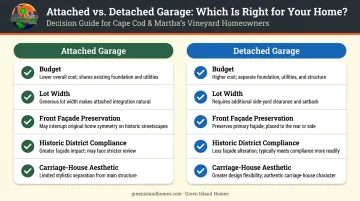
The best choice comes down to three factors: your lot size, your budget, and how prominently the garage will read from the street.
Attached Garage
An attached garage shares a wall with the house, which keeps costs lower — Fixr's 2025 data puts a site-built attached 1-car garage at $14,400–$19,200 and a 2-car at $24,000–$46,080. Interior access is a daily convenience, and utility connections are simpler.
The design challenge: if the garage doors face the street, they compete directly with the centered Colonial entry. A side-entry layout — where doors face the driveway, not the front of the house — solves this, but requires enough lot width to pull it off.
Detached Garage
If preserving the Colonial's front elevation matters most, a detached garage is worth the added cost. It sits separately on the property, leaving the original massing untouched — an approach that suits historic districts and prominent front façades. It also enables a carriage-house aesthetic that's historically authentic to New England.
The trade-off is cost. Detached 2-car garages often run $30,000–$60,000, and configurations with storage or workspace can reach $58,430–$86,400 according to Fixr.
Quick Decision Framework
| Factor | Favors Attached | Favors Detached |
|---|---|---|
| Budget | ✓ Lower cost | — |
| Lot width for side-entry | ✓ If generous | — |
| Front façade prominence | — | ✓ Preserves symmetry |
| Historic district | — | ✓ Less façade impact |
| Carriage-house aesthetic | — | ✓ More flexibility |
Colonial Garage Design Ideas That Complement Your Home's Character
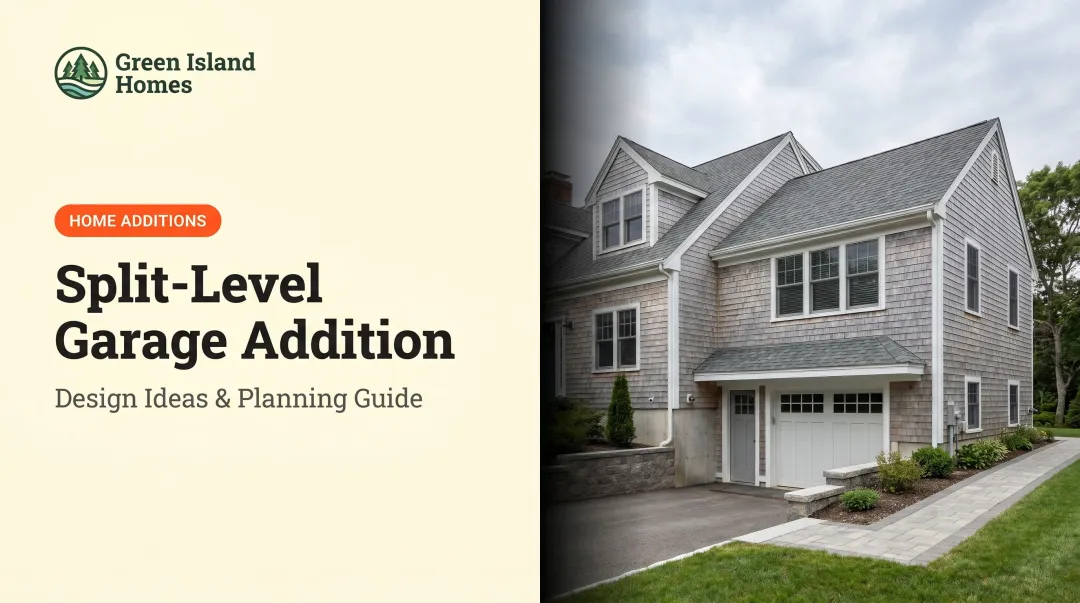
The Side-Entry Attached Garage
This is the most common solution for Colonial homeowners, and with good reason. Positioning the garage so the doors face the driveway rather than the street, the front façade keeps its symmetry intact. The garage mass reads as a side wing rather than a competing element.
The critical detail: the roofline, siding, and trim must continue the language of the main house. A garage that shares the same clapboard siding, gabled roof pitch, and trim profile will read as intentional. One that uses different materials or a lower, flatter roof will look like an addition.
The Carriage House Detached Garage
A separate carriage-house structure is the most architecturally authentic option for Colonial homes, echoing how New England properties were historically laid out. A gabled or gambrel roof, decorative cupola, and carriage-style doors create a secondary structure with its own character, without competing with the main house.
This approach works especially well in towns like Edgartown or Falmouth, where the lot size and historic streetscape reward traditional outbuilding arrangements.
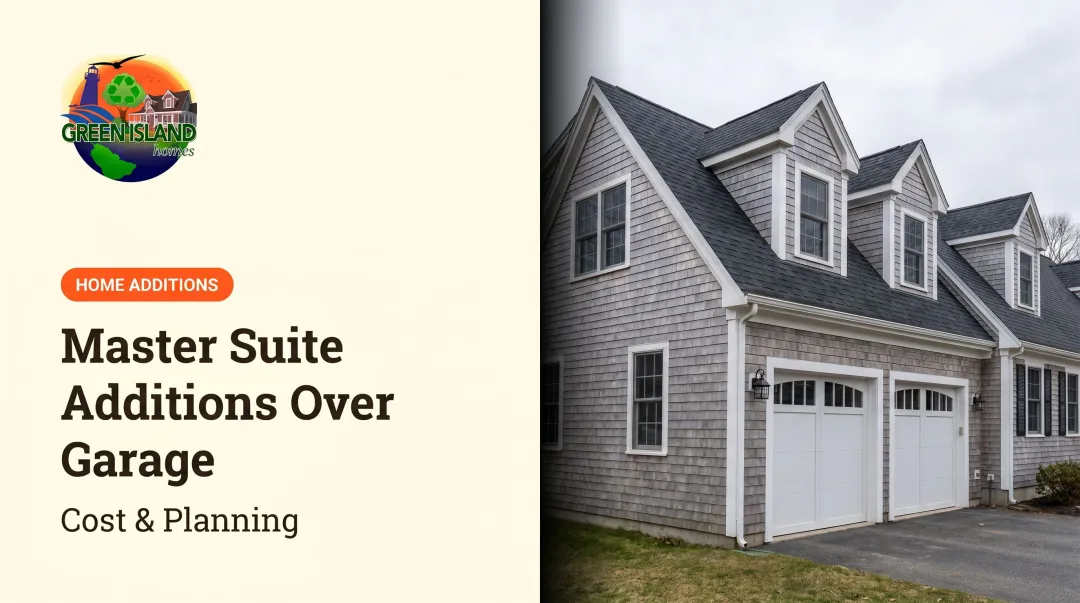
The Two-Story Garage with Bonus Room
Adding living space above the garage — a home office, guest suite, or flex room — is a popular way to maximize the square footage gained from the addition. The key is making the upper level feel deliberate rather than improvised.
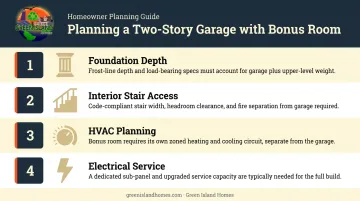
Colonial dormers, Palladian windows, and proportional gables on the upper story carry the period vocabulary upward. Without those details, a boxy second floor above a garage can look like a storage unit. Structurally, this option adds meaningful complexity. Plan for:
- Adequate foundation depth to support the added load
- Interior stair access integrated into the floor plan
- HVAC planning for the upper level (separate zone or system)
- Potentially separate electrical service depending on use
The Breezeway-Connected Garage
A covered walkway linking a detached garage to the main house is historically common in Colonial New England, and it solves the "attached convenience vs. detached aesthetics" problem neatly. The NPS Preservation Brief 14 specifically supports small hyphen or connector elements as a way to link new construction to historic buildings without compromising the original structure.
Keep the breezeway proportionally subordinate. An oversized connector can dominate the space between the two structures and look worse than either a clean attachment or a fully separate garage.
Key Architectural Details to Match Your Colonial Exterior
Getting the footprint right is only half the job. These five details determine whether the addition reads as part of the house or not.
Siding and Materials
White or painted wood clapboard is the most common Colonial exterior — match it on the garage exactly, including the exposure (the visible face width of each board). Fiber cement in a clapboard profile is a lower-maintenance alternative that reads similarly. Avoid vinyl or metal panel siding; the scale and sheen are visually incompatible with Colonial character.
Roof Style and Pitch
A steep-pitched gabled roof is the most authentic Colonial roofline for a garage addition. Dutch Colonial homes call for a gambrel instead. Either way, match the pitch closely to the main house — a mismatched roofline angle is one of the most obvious signs that a structure was added later.
Windows and Shutters
Colonial architecture depends on symmetry, so garage windows need to be evenly spaced and proportional, with shutters that match the home's existing treatment. Small-pane, double-hung windows are the historically appropriate choice. Horizontal sliders or single-pane casements undermine the period aesthetic immediately.
Garage Door Style
Carriage-house doors with raised panel details, crossbuck accents, and decorative hardware are the right call. They're available in genuine swing-style and modern overhead versions that mimic the look well. Flush steel doors — regardless of color — look wrong on a Colonial.
HomeAdvisor lists carriage-house doors at $1,200–$8,000, making the design upgrade meaningful but not prohibitive.
Trim and Lighting
Match the trim color and profile between the garage and main house. Lantern-style fixtures in black or oil-rubbed bronze above the garage doors reinforce the period aesthetic and add nighttime curb appeal. Small details, but they matter disproportionately from the street.
Planning Your Colonial Garage Addition
Zoning, Permits, and Local Regulations
Massachusetts law (780 CMR 105.1) requires a building permit before any garage construction begins. But in many Cape Cod and Martha's Vineyard towns, that's only the first approval needed.
- Falmouth: A Certificate of Appropriateness is required for exterior changes in local historic districts
- Barnstable: The Old King's Highway Historic District Committee reviews exterior changes
- Edgartown: The Historic District Commission meets twice monthly and requires public hearing notice
If your property falls within one of these districts, start the historic review process before finalizing drawings. Redesigning after an HDC objection adds time and cost. Allow extra lead time for abutter notification requirements — Falmouth notes this can take up to 10 days alone.
Site and Structural Considerations
Before committing to a design, verify:
- Setback compliance — detached structures have local minimums; check your town's zoning bylaw, not a general estimate
- Foundation adequacy — if attaching to the existing house, assess whether the current foundation can support the connection
- Utility access — electric service is standard; plumbing becomes relevant if adding a bonus room above
- Conservation or floodplain overlays — common on Cape Cod and the Vineyard; these can restrict lot coverage or require additional review
Working with the Right Contractor
A Colonial garage addition isn't a standard garage build. It requires someone who understands historic aesthetic requirements, local permitting processes, and how to integrate new construction with an existing structure without creating a visible mismatch.
Green Island Homes, based in Edgartown, works on additions across Cape Cod and Martha's Vineyard and brings direct experience with:
- Navigating HDC review processes in Falmouth, Barnstable, and Edgartown
- Matching new construction materials and detailing to existing Colonial exteriors
- Coordinating permits across multiple local boards when required
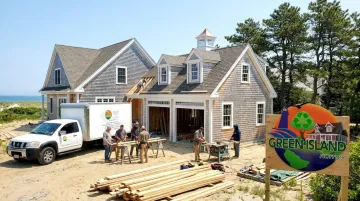
That combination of permitting knowledge and architectural familiarity can save weeks of back-and-forth in the approval stage.
Timeline Expectations
Plan for several months from first consultation to completion. Key variables that affect duration:
- Zoning review and setback confirmation
- Historic district hearing schedule (HDC meetings are typically bi-weekly)
- Building permit review period
- Materials lead times for custom doors, specialty siding, or trim
- Construction complexity — a two-story garage with a bonus room takes meaningfully longer than a simple single-story attached structure
How Much Does Adding a Garage to a Colonial House Cost?
Base Cost Ranges
| Garage Type | Typical Range |
|---|---|
| Attached 1-car (site-built) | $14,400–$19,200 |
| Attached 2-car (site-built) | $24,000–$46,080 |
| Detached 2-car | $30,000–$60,000 |
| Detached 2-car with storage/workspace | $58,430–$86,400 |
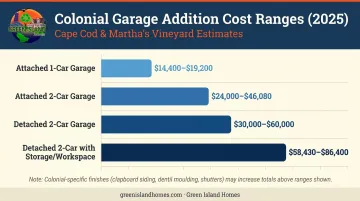
These ranges come from Fixr's 2025 data and represent standard construction. Colonial-specific finishes add to the total.
What Drives Costs Higher on a Colonial
- Carriage-house garage doors ($1,200–$8,000) — the single highest-impact visual upgrade
- Fiber cement or wood clapboard siding — fiber cement averages $7–$18 per square foot installed
- Custom trim work — exterior trim installation averages $1,388, with complex projects reaching $7,500+
- Steep-pitch roofing — pitch complexity increases both material quantity and labor
- Bonus room above the garage — living space above a garage adds roughly $125–$250 per square foot
Value Return
Nationally, HomeAdvisor reports 60%–70% ROI on garage additions at resale. In Massachusetts markets where enclosed parking commands a premium, a well-matched garage addition also improves buyer appeal — faster sales, fewer concessions, stronger competing offers.
That ROI depends heavily on execution. A mismatch in door style or siding material is immediately visible from the street — and it's the first thing buyers register before they ever step inside.
Frequently Asked Questions
Is it a good idea to put an addition on a Colonial home?
Yes — additions including garages can be strong investments when designed to respect the home's symmetry and architectural character. A well-matched addition increases usability and typically improves resale value without compromising the Colonial aesthetic that makes the home appealing in the first place.
How much does it cost to add a garage onto a house?
Costs vary widely by size, type, and finishes. Attached garages generally run $14,400–$46,080 for one or two cars; detached garages can reach $60,000–$86,000 with storage or workspace. Colonial-specific finishes — carriage doors, clapboard siding, custom trim — can add $5,000–$15,000 or more depending on scope.
Do I need a permit to add a garage to my home in Massachusetts?
Yes. Massachusetts building code (780 CMR 105.1) requires a permit before construction begins. Homeowners in Falmouth, Barnstable, or Edgartown historic districts will also need approval from the local Historic District Commission before breaking ground.
What style of garage door looks best on a Colonial-style house?
Carriage-house style doors with raised panels, crossbuck accents, and decorative hardware are the right fit. They're available in both authentic swing-out versions and modern overhead doors that replicate the look — both work well on Colonial homes.
Can I add living space above a garage on a Colonial home?
Yes, and it's a popular option for homeowners needing a home office, guest suite, or flex room. Colonial dormers and period-appropriate windows help the upper level feel like an intentional design choice. Budget for structural, HVAC, and stair planning separately in your budget.
How to update a Colonial home exterior?
Adding a well-matched garage is one of the most impactful updates. Combine it with fresh trim paint, updated shutters, period-appropriate lantern lighting, and improved landscaping for a complete curb appeal refresh that stays true to the Colonial style.