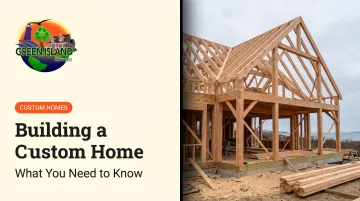
For many buyers, building custom isn't a luxury choice. It's the only way to get what they actually want, where they want it.
This guide walks through everything involved: defining your vision and budget, choosing the right lot, assembling your team, navigating permits, and managing the build through to move-in.
Key Takeaways
- Custom homes give you full control over layout, materials, and energy efficiency, but require more time and involvement than buying existing
- Set your budget before approaching builders, and include a 10% contingency reserve minimum on top of your build estimate
- On Cape Cod and Martha's Vineyard, lot selection is critical: Title 5 septic rules, wetland setbacks, and Conservation Commission review all affect what's buildable
- Construction loans fund the build in stages; most lenders require 20–25% equity before approving
- A locally experienced builder cuts delays, particularly through the permitting process in coastal Massachusetts
What Makes a Custom Home Different?
Not all new construction is the same. According to NAHB, custom builders create homes designed for each individual owner, often on land the buyer already owns, starting fresh with each design. Production builders, by contrast, develop communities around a fixed set of preselected styles on their own sites — buyers choose from existing options rather than defining them.
The difference matters practically:
- Custom home: Every floor plan decision, room configuration, material selection, and finish is tailored to you
- Production/spec home: Faster and often cheaper, but design flexibility is limited by the developer's template
- Semi-custom: A middle ground where buyers modify a base design — more flexibility than production, less than full custom
Full custom means you're involved from the first sketch to the final walkthrough. Expect hundreds of decisions — structural layout, room flow, material grades, cabinet hardware, fixture finishes. That depth of control is exactly what draws most buyers to the process.
On Cape Cod and the Vineyard, where existing inventory remains well below historical norms and resale prices have pushed above $480 per square foot, building custom is often the most direct path to the home you actually want in a location you're not willing to compromise on.
Step 1: Define Your Vision, Set a Budget, and Secure Financing
Start With What You Need
Before approaching any builder or lender, document your priorities:
- Number of bedrooms and bathrooms
- Architectural style preferences
- Accessibility requirements
- Energy efficiency goals
- Must-have features vs. nice-to-haves
Getting clear on these before design conversations begin saves time and prevents scope creep later.
Build a Realistic Budget
Construction costs vary widely based on size, materials, site conditions, and location. NAHB reports a 2025 national median of $166 per square foot for contractor-built homes — but custom builds on Cape Cod and Martha's Vineyard typically run considerably higher. Luxury custom homes in coastal New England markets generally range from $200 to $500+ per square foot.
Your budget needs to account for more than just construction:
- Land purchase (if not already owned)
- Architect and design fees
- Engineering costs
- Permit fees
- Site work and utility hookups
- Landscaping
- Furniture and move-in costs
- Contingency reserve
NAHB advises buyers to set aside a contingency fund of at least 10% of total project cost. On a complex coastal build, many experienced builders recommend closer to 15–20% given the likelihood of change orders and unforeseen site conditions.
How Construction Financing Works
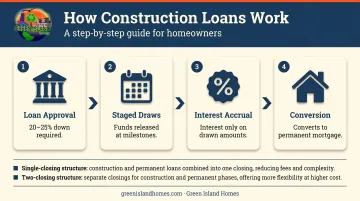
Custom home financing typically runs through a construction loan — a short-term product structured differently from a standard mortgage:
- Funds are released in draws (staged disbursements) as construction milestones are reached, not as a lump sum
- Interest accrues only on amounts drawn, not the full loan balance
- Most lenders require 20–25% down, since construction loan-to-value ratios typically run 75–80%
- At completion, the loan converts to a permanent mortgage — either through a single-closing or two-closing structure (where construction and permanent financing close separately)
Get pre-qualified before builder conversations begin. Not every bank offers construction loans, and your actual borrowing limit determines what's buildable within your vision.
Step 2: Find the Right Lot for Your Vision
Lot selection is one of the most consequential early decisions in a custom build — yet buyers consistently underestimate how much a single parcel's characteristics can shape the entire project.
What to Evaluate Before You Buy
- Soil conditions and topography: Affects foundation type and site prep costs
- Utility access: Connection to town water and sewer, or need for a private well and septic system
- Flood zone status: Coastal lots may carry FEMA flood zone designations affecting insurance and design requirements
- Resale potential: Not just what you want to build, but what the market will support
Always involve your builder in reviewing a lot before purchase. What looks like a buildable parcel on paper can present significant constraints once site conditions are assessed.
Cape Cod and Martha's Vineyard Regulatory Layers
Building in this region adds regulatory complexity that buyers from other markets often don't anticipate. Three layers in particular can affect both feasibility and your timeline:
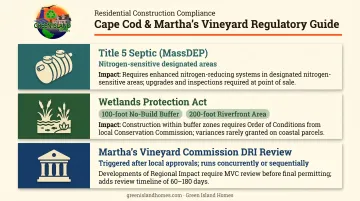
- Title 5 Septic (MassDEP 310 CMR 15.000): Governs all septic construction on Cape Cod. Amendments effective July 7, 2023 created Natural Resource Nitrogen Sensitive Areas in coastal watersheds, which may require nitrogen-reducing septic technology — a requirement that affects both lot feasibility and budget.
- Wetlands Buffers (Massachusetts Wetlands Protection Act): Applies to any work within 100 feet of protected resource areas. Septic systems require at least 50-foot setbacks from certain resource areas, and 200-foot Riverfront Areas carry additional restrictions. A Conservation Commission Notice of Intent can add weeks to permitting.
- Martha's Vineyard Commission (Chapter 831): The MVC reviews Developments of Regional Impact. If your project is classified as a DRI, MVC approval must come before any town board can issue a building permit — a sequencing requirement that can push your schedule back significantly.
Review these regulatory layers before committing to a lot — ideally with a builder who knows local permitting firsthand.
Step 3: Assemble Your Team and Design Your Home
Who You Need
A custom home requires a coordinated team:
- General contractor/builder: Manages the entire build, coordinates subcontractors, handles day-to-day site operations
- Architect or designer: Translates your vision into permitted construction documents
- Structural engineer: Required for complex structural elements or challenging site conditions
- Interior designer (optional): Helps with finish selections and space planning
These roles overlap. A design-build firm handles both architecture and construction under one roof; other projects separate the architect and builder. Either approach works — clarity about responsibilities is what matters.
Vetting a Builder
Massachusetts requires a Construction Supervisor License (CSL) for anyone supervising covered residential construction work. Verify any builder's CSL status through Mass.gov's license lookup before signing anything.
Beyond licensing, look for:
- A portfolio of completed projects with similar scope to yours
- References from past clients willing to speak candidly
- Clear communication practices — you'll interact with this person constantly for 12+ months
- Familiarity with local building codes and permitting offices in your specific town
On the Vineyard and Cape, local knowledge isn't just a soft advantage. A builder with existing relationships at town permitting offices and with regional subcontractors navigates scheduling, inspections, and material sourcing more efficiently than one learning the local landscape on your project.
Green Island Homes, based in Edgartown, holds a full license and insurance, serves both Cape Cod and Martha's Vineyard, and carries HomeAdvisor Screened & Approved status. For homeowners weighing faster timelines or lower long-term energy costs, they also offer energy-efficient modular home options that provide meaningful customization without the extended schedule of a fully site-built project.
The Design Phase
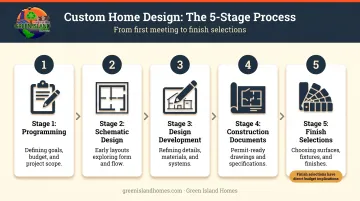
Once your team is in place, the design process typically involves:
- Programming: Translating your vision into a brief — room list, square footage targets, must-have features
- Schematic design: Initial floor plans and elevations for review and feedback
- Design development: Refining plans through multiple revision rounds
- Construction documents: Permit-ready drawings with full specifications
- Finish selections: Cabinetry, fixtures, flooring, countertops, lighting — these decisions have budget implications and should be locked in before construction starts
Step 4: Permits, Construction, and the Path to Move-In
Permitting
A typical custom home in Massachusetts requires:
- Building permit (required before any construction begins)
- Zoning clearance confirming the design complies with local zoning bylaws
- Site plan approval in many towns
- Septic/well permits if not connecting to municipal systems
- Conservation Commission Order of Conditions if work occurs near protected resource areas
The Conservation Commission process has defined timelines: an NOI hearing must occur within 21 days of a complete filing, and the Order of Conditions must be issued within 21 days after the hearing closes. Appeals have a 10-business-day window. These are statutory minimums — actual schedules depend on hearing availability and the complexity of the application.
Your builder typically manages this process. Still, knowing what's required — and building those timelines into your schedule from the start — prevents surprises once construction is underway.
Construction Phases
Once permits are in hand, construction moves through these stages in sequence:
- Site preparation — clearing, grading, excavation
- Foundation — type depends on soil conditions and design
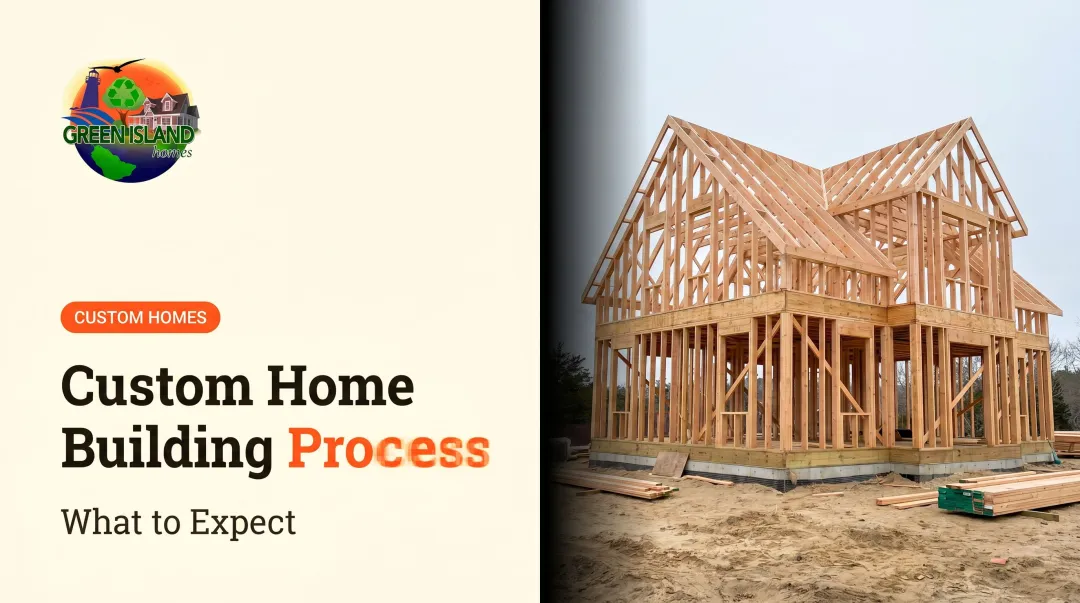
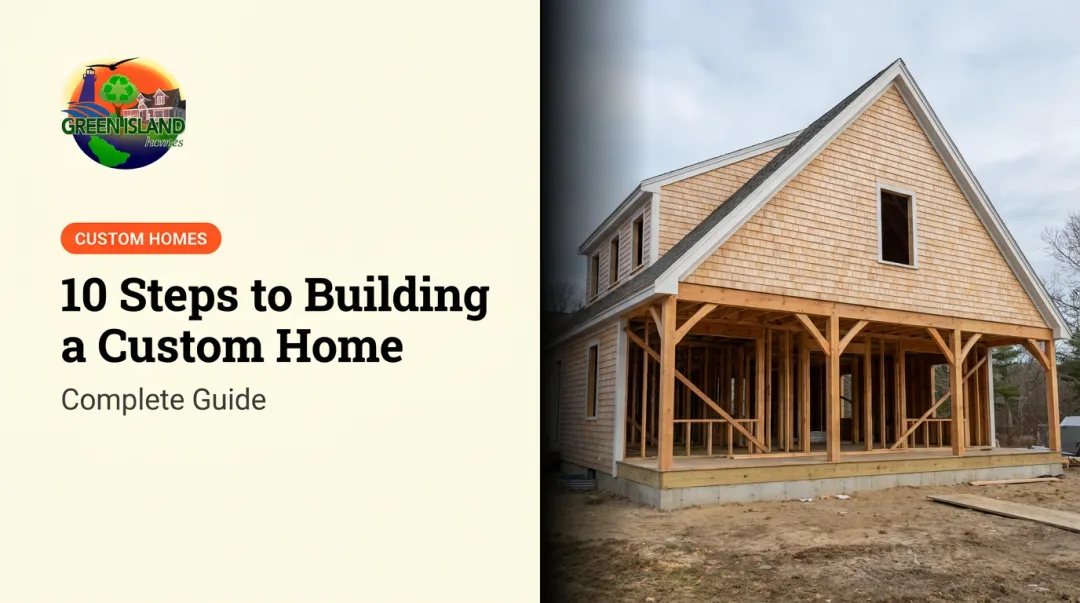
- Framing and roofing — structure enclosed against weather
- Rough-ins — plumbing, electrical, HVAC installed before walls close
- Insulation and drywall
- Interior and exterior finishes — flooring, cabinetry, trim, paint, siding, windows
- Landscaping and final site work
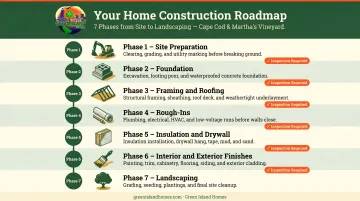
Each phase requires inspections before the next can begin. Those inspection gates catch problems early, before they're buried behind drywall or under a finished floor.
Communication During the Build
Set your communication schedule with the builder before construction starts. At minimum:
- Regular written updates on progress, upcoming decisions, and any issues
- Documented change orders for any modification to the original scope — price and approve before work proceeds, not after
- Scheduled site visits at key milestones
Any change to the original plan that isn't documented and priced in writing is a source of future disputes. Don't rely on verbal agreements.
Final Walkthrough and Move-In
Before move-in, you and your builder walk the completed home against the original specifications. Anything that doesn't meet the agreed standard goes on a punch list — a written record of what needs correction and by when.
The town issues the certificate of occupancy only after required inspections pass and all punch list items are resolved. Don't schedule your move-in date until both are confirmed.
Key Tips to Keep Your Custom Build on Track
Even well-planned custom builds can go sideways without the right habits in place. Three practices consistently separate smooth projects from costly, stressful ones:
- Lock in decisions early. Late changes are the single most common source of cost overruns and delays. Make your finish selections, appliance choices, and structural decisions before construction begins — not during it.
- Build schedule buffers. Environmental review, Conservation Commission hearings, and MVC DRI proceedings (on the Vineyard) add required procedural steps before permits can issue. These aren't negotiable timelines.
- Document everything. Keep signed contracts, change orders, selection sheets, and inspection reports organized throughout the project. Written records resolve disputes; verbal agreements don't.
Frequently Asked Questions
How much does it cost to build a custom home on Cape Cod or Martha's Vineyard?
Construction costs vary significantly based on size, specifications, and site conditions. National benchmarks from NAHB put luxury custom builds broadly in the $200–$500+ per square foot range, but coastal Massachusetts markets typically run at the higher end. Get quotes directly from local builders — costs in this market reflect local labor, material logistics, and regulatory requirements that national averages don't capture.
Is it cheaper to build a custom home than buy an existing one?
With Cape Cod's July 2025 median sale price at $820,000 and limited inventory still below pre-2020 levels, building custom can be cost-competitive — especially once you factor in renovation costs on older homes. Land cost and build scope determine the math; get local builder quotes before deciding.
How long does it take to build a custom home from start to finish?
The full process — from initial planning through certificate of occupancy — typically takes well over a year. Coastal Massachusetts projects add time for Conservation Commission review, potential MVC DRI proceedings on the Vineyard, and seasonal weather constraints; build timeline buffers accordingly.
What is a construction loan and how does it work?
A construction loan is a short-term loan that funds the build in stages (draws) as milestones are completed. Most lenders require 20–25% down, and interest accrues only on amounts drawn. At project completion, the loan converts to a standard mortgage — either through a single closing or a separate refinance.
Do I need an architect to build a custom home?
Legally, the requirement depends on project scope and municipality. For any fully custom home, working with a licensed architect is strongly recommended — they produce permitted construction documents, ensure code compliance, and translate your vision into a buildable design. Skipping this step to cut costs typically creates more expensive problems later.
What permits are required on Cape Cod or Martha's Vineyard?
At minimum: a building permit, zoning clearance, and (if off municipal systems) septic and well permits. Projects near wetlands require a Conservation Commission Notice of Intent. On Martha's Vineyard, large or regionally impactful projects may also require Martha's Vineyard Commission DRI review before town permits are issued.