
This guide covers that full spectrum. Whether you're a first-time DIYer looking for a quick weekend win or a homeowner staring down a major remodel and wondering what's actually possible, there's something here for you. We'll move room by room — kitchens, bathrooms, living spaces, exteriors — with practical guidance on what each transformation actually involves, what it costs, and, critically, which parts you can tackle yourself versus when to bring in a licensed professional.
Key Takeaways
- Paint, hardware swaps, and new lighting can transform how a room looks and feels — no demolition needed.
- Minor kitchen remodels recoup over 113% of cost nationally (and up to 134% in New England) — the best ROI of any room.
- Exterior upgrades like a steel entry door can recoup 216% of cost at resale, making curb appeal one of the highest-return investment categories.
- Bathrooms pack the most systems into the smallest space; some updates are weekend DIY, while others require a licensed pro.
- Take clear "before" photos before you start. You'll want them.
Low-Effort, High-Impact DIY Transformations
Not every meaningful renovation requires a dumpster in the driveway. Some of the most dramatic before-and-after results come from cosmetic changes that cost a few hundred dollars and a free weekend.
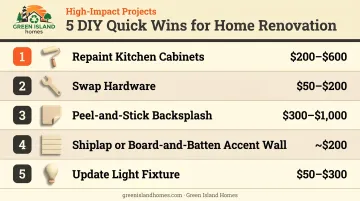
Quick Wins Worth Doing First
- Repaint kitchen cabinets — the single highest-ROI DIY move available to most homeowners. Skip the cheapest paint; mid-range cabinet-specific paints hold up far better.
- Swap hardware — knobs and pulls run as little as $2–$3 each but visually update an entire kitchen or bathroom.
- Install peel-and-stick backsplash tile — starts around $4/sq. ft., with full DIY projects typically running $300–$1,000 according to Angi's cost guide.
- Add shiplap or board-and-batten to an accent wall — This Old House documented a DIY board-and-batten project using MDF for around $200 in materials.
- Update a light fixture — swapping a builder-grade fixture for something with character takes two hours and transforms the room.
The Power of Paint
Paint is the most undervalued renovation tool. A gallon of quality interior paint runs $20–$30, and a standard bedroom costs $300–$750 to paint professionally; doing it yourself cuts that figure dramatically.
Zillow's 2025 paint research found that a dark gray living room can add an estimated $2,600 to a home's sale price, while an olive green kitchen adds around $1,600. Color choice matters.
Real Before/After Scenarios
These are the kinds of transformations readers describe most often:
- A bathroom wallpapered in a '80s floral pattern → stripped walls, fresh white paint, new mirror, updated vanity light
- A dark bedroom with heavy curtains → bright, airy space with white walls and linen drapes
- A builder-bland entryway → character-filled foyer with a bold front door color, new house numbers, and updated light fixture
None of these required a contractor — and you'd never guess it from the results.
Kitchen Before and Afters: From Dated to Dream
Kitchens are where most homeowners start because they're the most-used room in the house and the one buyers scrutinize most at resale.
Common "Before" Problems
- Dark wood cabinets with dated door profiles
- Poor task lighting (one ceiling fixture over everything)
- Disconnected layout with no clear work triangle
- Outdated appliances, mismatched finishes
- No backsplash, or a dated tile choice from two decades ago
Three Types of Kitchen Transformations
1. The Full Gut — 1960s Galley to Open-Plan Removing a wall between the kitchen and dining room, adding an island, installing new cabinets and appliances. This is a contractor project. Nationally, a major kitchen remodel averages $82,793 and recoups about 51% at resale. The math works best when you plan to stay 7+ years — livability gains are real, but full cost recovery at resale isn't.
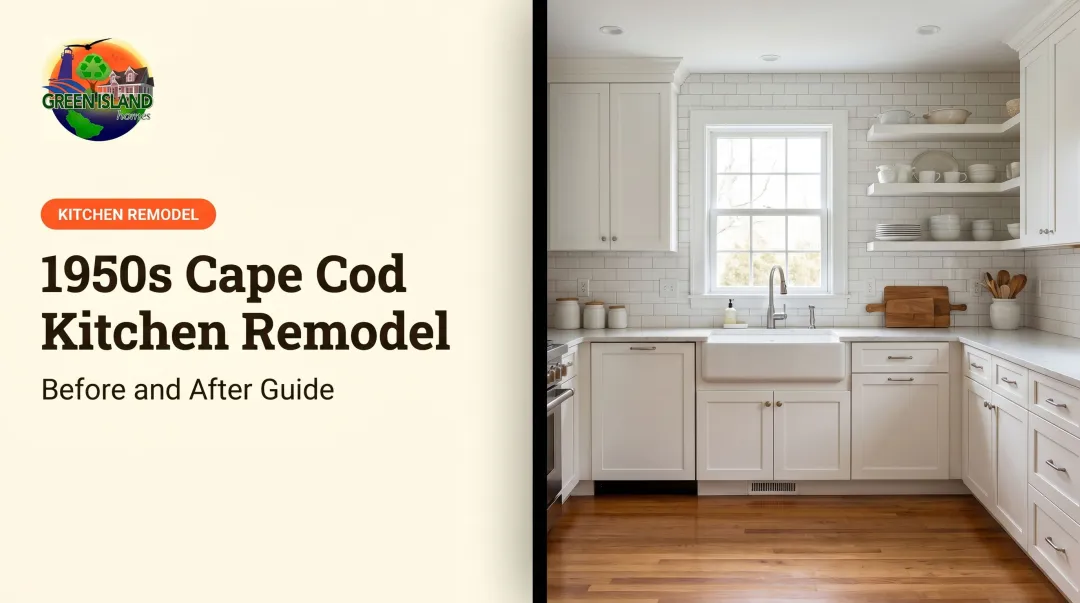
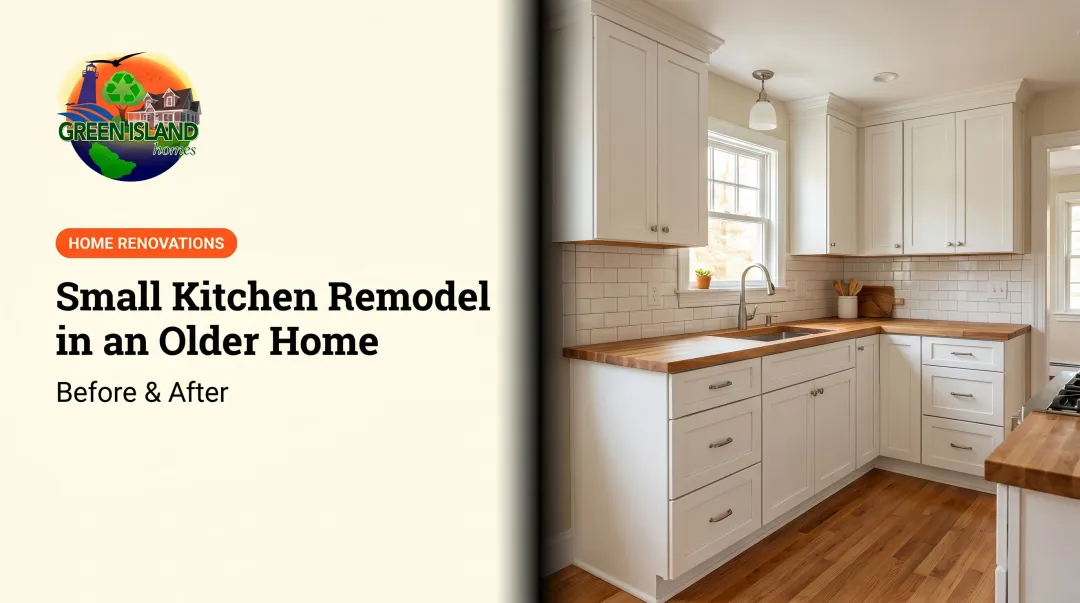
2. The Budget Facelift — Same Bones, New Face Paint the cabinet boxes and doors, add new hardware, install a peel-and-stick or tile backsplash. This approach can transform a kitchen for under $3,000 in materials if you do the labor yourself. Cabinet refinishing runs $1,800–$4,200 professionally; painting yourself can bring material costs under $500.
3. The Cosmetic Refresh — Details That Change Everything Replace the light fixture, add a butcher block section to the counter, install open shelving on one wall. None of these require permits or contractors, yet the before-and-after photos are dramatic enough to perform well on Pinterest or Instagram.
The Cabinet Dilemma: Paint vs. Reface vs. Replace
| Option | When It Makes Sense | Typical Cost |
|---|---|---|
| Paint/refinish | Cabinet boxes are solid, just ugly | $1,800–$4,200 (pro) |
| Reface | Boxes are in good shape, want new door style | $4,234–$10,226 |
| Replace | Boxes are damaged, layout needs to change | $14,590+ for full remodel |
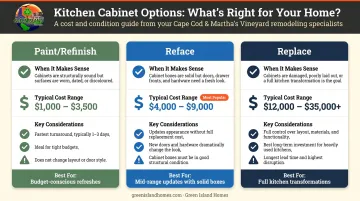
Painting existing cabinet boxes is one of the highest-ROI moves in home improvement. New England minor kitchen remodels — which typically include cabinet repaints, new hardware, and updated appliances — recoup an average of 134.3% of project cost according to JLC's 2025 Cost vs. Value report.
Photography Tip
Once the work is done, document it properly — the photos are only as powerful as the consistency between shots. Shoot from the same corner angle in both phases. Clear all countertops, use natural light from the same window, and shoot at the same time of day. That consistency is what makes transformations look dramatic when shared online.
Bathroom Before and Afters: Small Space, Big Impact
Bathrooms are the most technically complex rooms to renovate per square foot — plumbing, electrical, tile, and waterproofing all intersect in a space often smaller than a walk-in closet. They're also where some of the most satisfying transformations happen. Here's how those transformations break down by budget and scope.
Three Bathroom Transformation Types
Powder Room Makeover (~$2,000–$5,000) New vanity, statement mirror, updated light fixture, bold wallpaper. A beige half-bath that's been ignored for twenty years can become the most-commented-on room in the house. No plumbing moves required.
Mid-Range Bathroom Renovation (~$10,000–$20,000) New tile floor, refinished or retiled shower walls, frameless glass enclosure, updated fixtures. This is the renovation that takes a 1995 bathroom with builder-grade everything and makes it look like it belongs in a design magazine.
Nationally, midrange bathroom remodels average $26,138 and recoup about 80%. New England homeowners see closer to 90.5% recouped.
Full Gut Renovation ($25,000+) Strip to the studs, heated floors, curbless shower, double vanity, new plumbing rough-ins. This is a contractor project from day one.
High-Impact Weekend Updates
These are underrated and genuinely effective:
- Swap the builder-grade vanity light bar for a well-chosen fixture
- Replace the toilet seat (takes fifteen minutes, looks terrible when it's old)
- Re-caulk the tub and shower surround
- Add a new mirror — frameless or with an interesting frame profile
- Replace the toilet paper holder, towel bar, and robe hook as a set
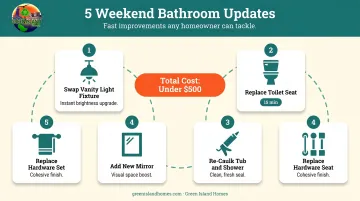
Total cost for all of the above: well under $500. Before-and-after photos of these small updates routinely outperform full gut renovations on social media — the contrast is that sharp.
What Not to DIY in Bathrooms
Some bathroom work requires licensed professionals — full stop:
- Waterproofing — Code requires nonabsorbent surfaces extending at least 6 feet above the floor in shower areas. Failures behind tile are invisible until they're catastrophic, and repairs routinely cost more than the original job.
- Electrical near water — GFCI outlets, vent fans with integrated lights, and any new circuits near wet areas require a licensed electrician. In Massachusetts, electrical work must be performed by a licensed master or journeyman electrician; the Mass.gov home improvement page outlines the relevant requirements.
- Plumbing rough-ins — moving a toilet, sink, or shower drain requires a licensed plumber in Massachusetts.
Living Rooms, Bedrooms, and Bonus Spaces
These rooms rarely require permits for cosmetic work, which makes them ideal DIY territory. The before-and-after potential is real — and the tutorials are genuinely good.
Transformations Worth Trying
- Paneled accent wall with trim moulding — board-and-batten or picture-frame moulding creates architectural detail that looks custom at a fraction of custom cost
- Built-in bookcase surround with electric fireplace — IKEA Billy bookcase hacks with face-frame trim and a built-in electric fireplace insert; This Old House documented similar projects for under $400 in materials
- Bedroom-to-home-office conversion — wallpaper on one wall, a built-in desk with storage, and new lighting completely transform a spare bedroom
- Master bedroom refresh — new flooring and a furniture layout change (moving the bed to a different wall, eliminating the TV-across-from-bed arrangement) can make the same room feel twice as large
Each of these projects works because the structural framing — walls, ceilings, built-ins — is doing the visual work. That same principle applies to a broader set of architectural upgrades worth knowing about.
Architectural Details That Do the Heavy Lifting
The projects that produce the most dramatic before-and-after photos:
- Coffered ceilings (installed, these run $109–$129/sq. ft. — but DIY foam or MDF grid systems are far cheaper)
- Board-and-batten walls — one of the most popular DIY projects online, with strong tutorials and material costs under $300 for an average room
- Slatted wood accent walls — a current trend that photographs extremely well
- Built-in shelving flanking a fireplace or window
For more involved built-ins — or projects that require structural support behind a feature wall — Green Island Homes offers drywall and custom carpentry services on Cape Cod and Martha's Vineyard. Getting the framing right the first time saves time and money on the finish work.
Bonus Space Transformations
- Finished basement → family room or in-law suite. HomeAdvisor estimates average basement finishing at $32,000, ranging $15,000–$75,000 depending on scope.
- Laundry room → wire shelves swapped for board-and-batten walls with a butcher block counter and upper cabinets. This one photographs exceptionally well and costs under $1,500 in materials.
- Garage → organized, functional space with wall-mounted storage systems and an epoxy floor coating. DIY-friendly and often done in a weekend.
Exterior and Curb Appeal Transformations
The entire visual impression of a house can shift with the right exterior changes. And unlike interior renovations, curb appeal improvements pay off before a home even hits the market.
Research published in The Journal of Real Estate Finance and Economics found that curb appeal can account for up to 7% of a home's sale price — a meaningful number on Cape Cod and Martha's Vineyard, where property values run well above national averages.
Three Exterior Transformation Types
1. Basic Ranch Modernized Fresh white or gray paint scheme, black shutters, new landscaping, updated light fixtures. The house itself doesn't change — the visual reading of it completely does.
2. Farmhouse Porch Revival New siding, repaired railings, a bold trim color, and fresh porch furniture. Often the porch is structurally sound but just needs cosmetic attention and some carpentry work on damaged elements.
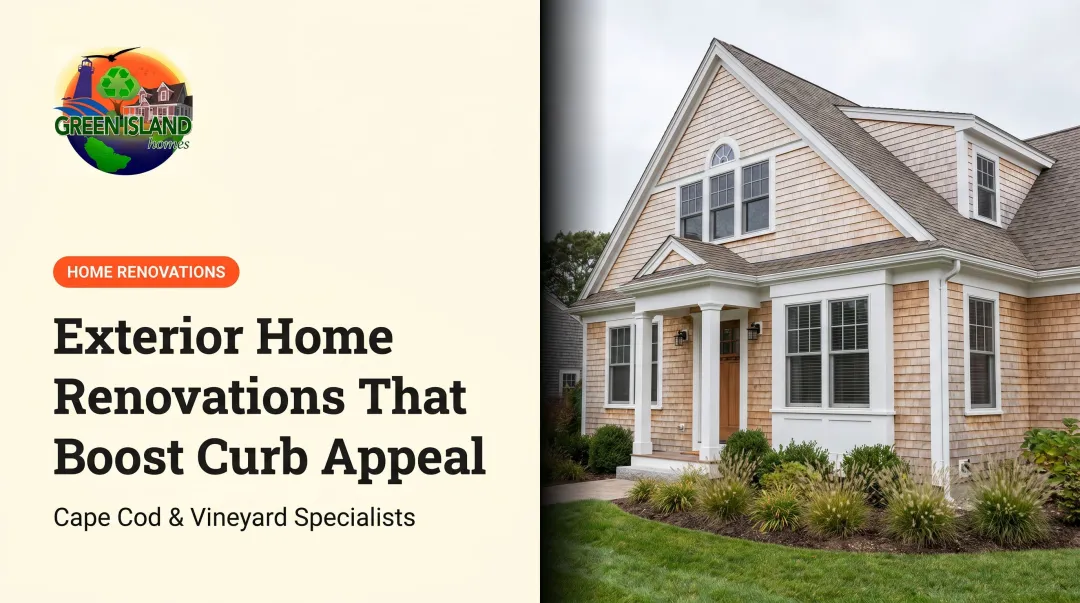
3. Coastal Cottage Refresh (Classic New England) Gray shingles, white trim, a new front door, improved walkways — the kind of update that keeps the classic Cape character while making the house look cared-for and current. This is a renovation type Green Island Homes handles regularly on Cape Cod and Martha's Vineyard, including siding replacement, roofing, and deck construction.
Low-Cost DIY Curb Appeal Wins
These can transform a home's exterior for a few hundred dollars:
- Paint the front door a bold, high-gloss color
- Install new house numbers in a modern font and finish
- Update porch lighting fixtures
- Add window boxes with seasonal plantings
- Pressure wash the driveway and walkways — average cost is around $311 nationally
When You Need a Pro for Exterior Work
Some exterior projects require licensed contractors — especially on Cape Cod and Martha's Vineyard, where coastal regulations and flood zone rules add complexity:
- New roofing — requires a licensed contractor in Massachusetts
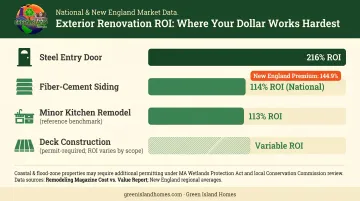
- Full siding replacement — fiber-cement siding recoups 114% nationally and up to 144.9% in New England, but installation requires professional expertise
- Deck construction near water or in flood zones — FEMA's substantial improvement threshold means that additions valued at 50% or more of a structure's market value must meet current code, which can affect scope and trigger permitting requirements
- Structural additions — front porch additions, mudrooms, and similar work require permits and licensed contractors
If you're a homeowner in this area weighing any of these projects, Green Island Homes (based in Edgartown) manages exterior work from permitting through completion — roofing, siding, decks, and structural additions included. Reach them at 774-563-9714 or sales@greenislandhomes.com.
When to DIY and When to Call a Pro
The honest answer: more projects go wrong than people admit. Angi's 2026 survey of professionals found that 55% of drywall repair attempts, 51% of plumbing work, and 51% of electrical repairs by homeowners resulted in problems requiring professional correction.
The DIY Green Zone
These projects are genuinely appropriate for capable homeowners:
- Interior painting and wallpaper
- Cabinet painting and hardware replacement
- Tile installation (with proper prep and substrate)
- Peel-and-stick backsplash
- Trim and moulding work
- Light fixture swaps (on existing circuits, with power off)
- Flooring installation (engineered hardwood, LVP, laminate)
- Landscaping and pressure washing
Non-Negotiable Hire-a-Pro Scenarios
- Gas line work — no exceptions, ever
- Load-bearing wall removal — requires structural assessment and permits before any demo
- Electrical panel upgrades, new circuits, or any work near water — Massachusetts requires licensed electricians for all residential electrical work
- Plumbing rough-ins — licensed plumbers only in Massachusetts, beyond minor repairs
- Roofing — requires a licensed specialty contractor in Massachusetts
- Foundation work — structural, consequential, and not recoverable if done wrong
- Any permitted addition or structural change — requires a licensed Construction Supervisor
The Hybrid Approach
Most renovation budgets go further when you hire for structural and systems work, then handle painting, finish trim, and decorating yourself. A contractor covers what needs to be licensed and inspected — you take care of the rest.
If you're on Cape Cod or Martha's Vineyard and weighing a larger project, Green Island Homes offers free estimates and can walk you through exactly what requires a licensed pro versus what's realistic to DIY.
Frequently Asked Questions
Frequently Asked Questions
What is the 30% rule in remodeling?
The 30% rule is an informal guideline suggesting renovation spending shouldn't exceed 30% of a home's current market value for any single project. The logic is that over-improving relative to neighborhood comps reduces ROI — though it's a rule of thumb, not an industry standard.
Is $50,000 enough to renovate a house?
It depends on scope. Angi's 2026 data puts a whole-home renovation for a 1,250–1,600 sq. ft. home at $52,135 on average — and a kitchen plus bathroom remodel in New England alone runs close to $56,000. In short, $50,000 covers one to two major rooms, not a full gut renovation.
What does a $10,000 bathroom remodel look like?
At $10,000, expect new tile flooring, an updated vanity and toilet, fresh fixtures, and a retiled or repainted shower — without moving the plumbing. The moment you relocate a drain or supply line, costs increase substantially. Plumber labor in Massachusetts runs $45–$200/hour.
Is it cheaper to renovate an old house or build new?
Renovation typically costs less upfront, but structural, electrical, or plumbing surprises in older homes can close that gap fast. NAHB's 2024 data puts average new construction at roughly $162/sq. ft. nationally — renovation starts lower but final costs depend heavily on what's behind the walls.
What home renovations add the most value?
The top performers in 2025 JLC data include:
- Steel entry door: 216% recouped nationally
- Fiber-cement siding: 114%
- Minor kitchen remodel: 113%
NAR's research also highlights hardwood floor refinishing at 147% cost recovery — one of the most overlooked high-ROI projects available.